Introduction
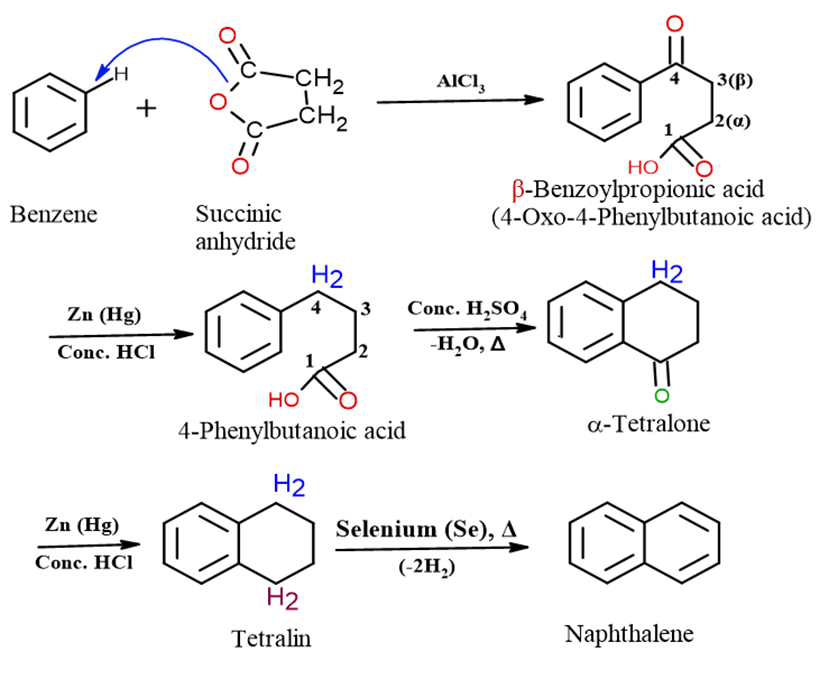
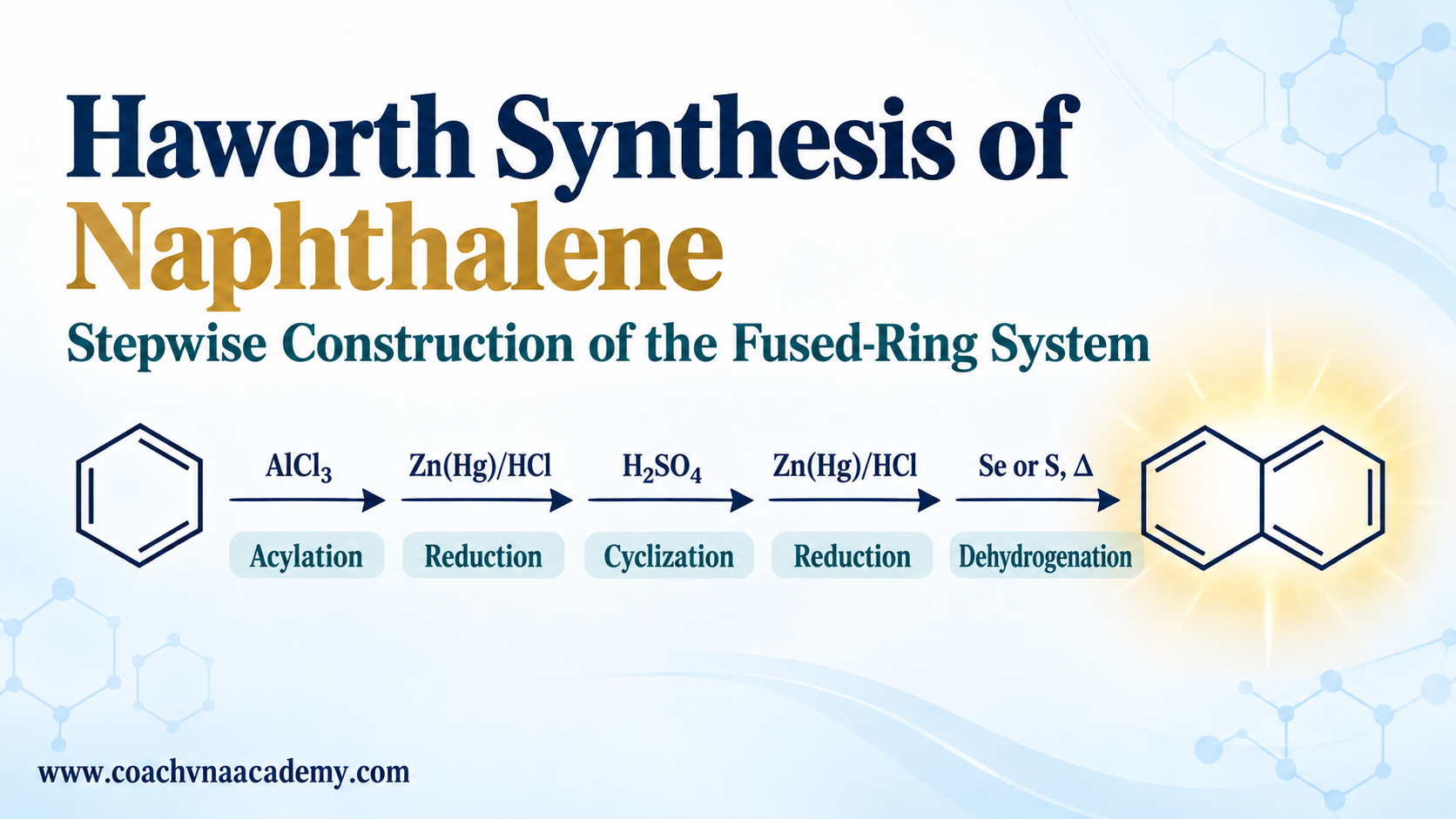
The Haworth synthesis of naphthalene is an important method for constructing the fused-ring system of naphthalene. It involves Friedel–Crafts acylation, reduction, ring closure and final conversion into naphthalene. This article explains the complete reaction sequence, intermediates, reagents and important examination points in simple language.
The synthesis of Naphthalene proceeds through the following five stages:
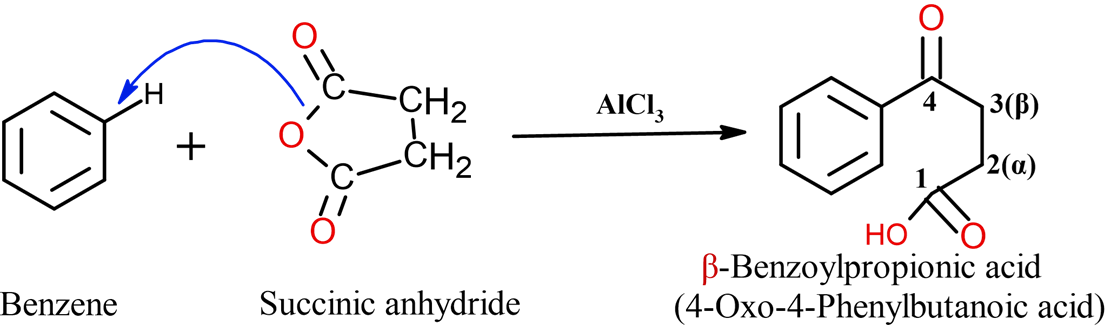
Step 1: Friedel-Crafts Acylation
First, benzene reacts with succinic anhydride in the presence of anhydrous aluminium chloride. This Friedel–Crafts acylation produces β-benzoylpropionic acid. Next, zinc amalgam and concentrated hydrochloric acid reduce its carbonyl group and form γ-phenylbutyric acid.
Step 2: Clemmensen Reduction
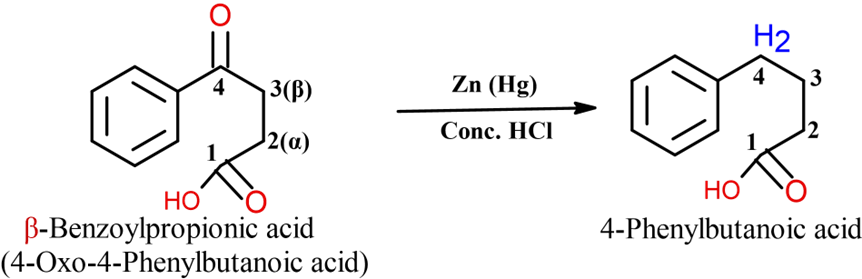
The carbonyl group (C=O) in the side chain of 3-benzoylpropanoic acid is then reduced to a methylene group (CH2) using Clemmensen reduction (Zinc amalgam (Zn/Hg) in concentrated HCl or Wolf-Kishner reduction. This yields 4-phenylbutanoic acid.
Step 3: Intramolecular Friedel-Crafts Acylation (Cyclization)
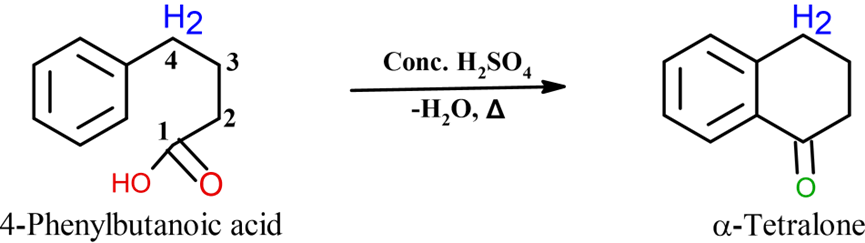
4-Phenylbutanoic acid is treated with a dehydrating and cyclizing agent, typically concentrated H2SO4 or HF. The ring-closure occurs via an intramolecular Friedel-Crafts acylation, forming the six-membered ring structure, alpha-tetralone (1-oxo-1,2,3,4-tetrahydronaphthalene).
Step 4: Reduction
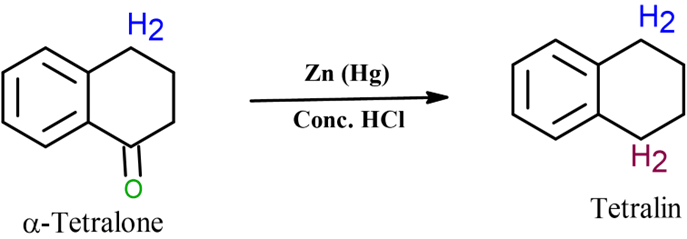
The remaining carbonyl group in alpha-tetralone is reduced using Clemmensen reduction to give Tetralin (1,2,3,4-tetrahydronaphthalene).
Step 5: Dehydrogenation (Aromatization)
Finally, Tetralin is heated with a catalyst like Sulfur (S), Selenium (Se), or Palladium on Charcoal (Pd/C) at a high temperature. This removes four hydrogen atoms (dehydrogenation), converting the cyclohexene ring into an aromatic ring, yielding the final product, Naphthalene.

Summary: Multi-step Haworth Synthesis of Naphthalene
First, benzene reacts with succinic anhydride in the presence of anhydrous aluminium chloride. This Friedel–Crafts acylation produces β-benzoylpropionic acid. Next, zinc amalgam and concentrated hydrochloric acid reduce its carbonyl group and form γ-phenylbutyric acid.
Subsequently, concentrated sulfuric acid promotes intramolecular cyclization and produces α-tetralone. Then, reduction converts α-tetralone into tetralin. Finally, dehydrogenation removes hydrogen from tetralin and yields naphthalene. Therefore, the Haworth method constructs the second aromatic ring through a systematic sequence of acylation, reduction, cyclization and dehydrogenation.