
Strength of Solutions
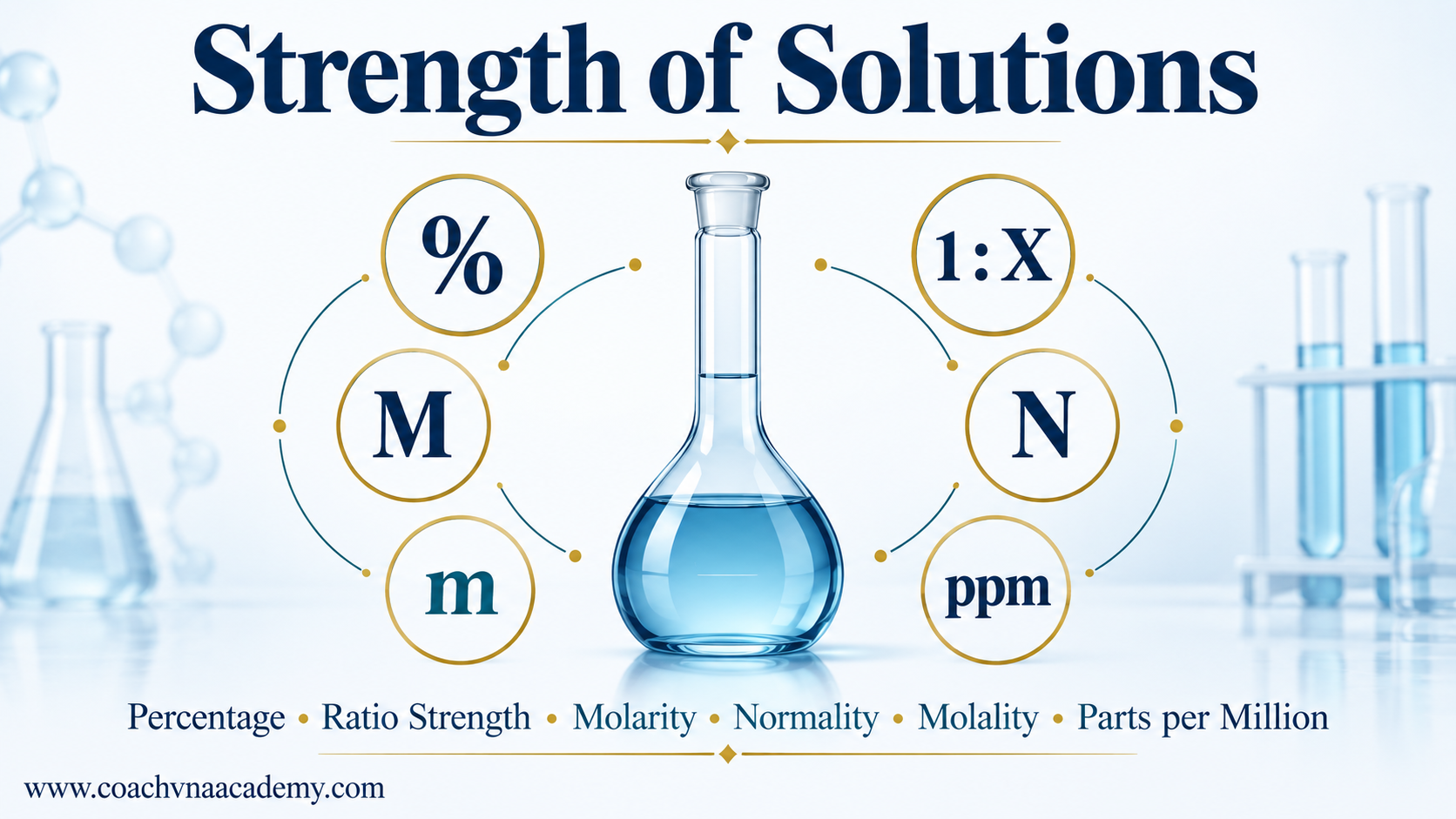
Learn percentage strength, ratio strength, molarity, normality, molality and parts per million with simple formulas, conversions and pharmaceutical examples.
Explore Pharmaceutical Inorganic and Analytical Chemistry notes for B.Pharm students. Learn pharmaceutical analysis, qualitative and quantitative techniques, inorganic pharmaceuticals, impurities, limit tests, assays and important analytical methods through simple explanations, examples, infographics and exam-oriented study materials.
Learn percentage strength, ratio strength, molarity, normality, molality and parts per million with simple formulas, conversions and pharmaceutical examples.
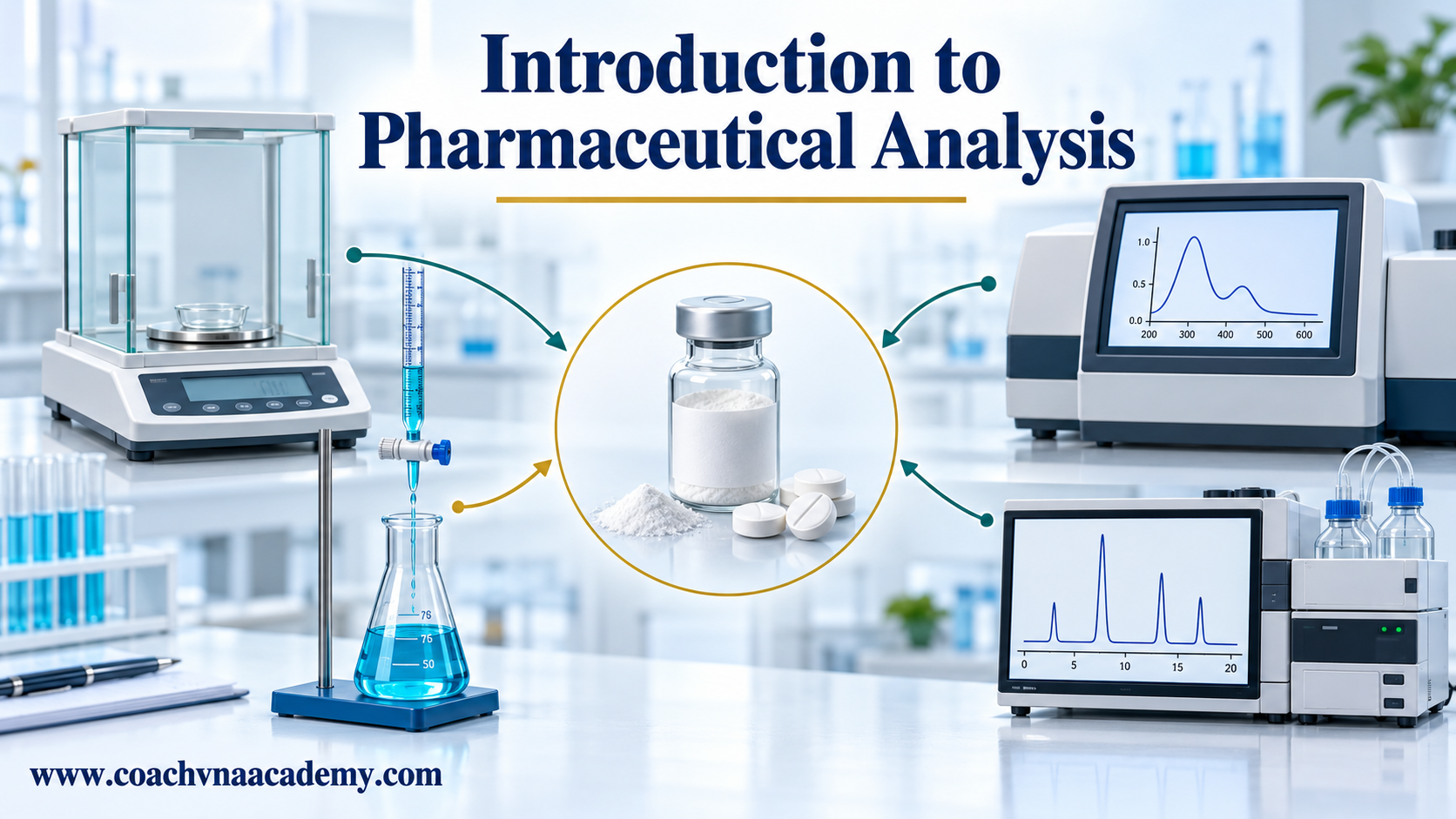
Pharmaceutical analysis helps establish the identity, purity, strength and quality of medicines. These student-ready notes explain its meaning, scope, importance, qualitative and quantitative approaches, major analytical techniques and the usual analytical workflow.
Limit tests are quantitative or semi-quantitative tests designed to identify and control small quantities of impurities which are likely to be present in a substance. Think of these as “pass/fail” tests to ensure chemical purity. It determines if the impurity is below the maximum allowable limit specified by the Pharmacopoeia. Definition & Logic Limit Test … Read more
In Pharmaceutical Chemistry, an impurity is any substance present in a medicinal agent other than the chemical entity itself. Even a tiny amount of impurity can make a drug toxic or reduce its shelf life. It is very essential to understand where these impurities come from for ensuring drug safety and quality. Impurities can enter … Read more
An error is the difference between the measured value and the “true” or accepted value. Even with the best equipment, some error is always present. In pharmaceutical analysis, errors can significantly impact the safety and efficacy of a drug. While errors can never be zero, they must be within the Official Limits set by the … Read more
Preparation and standardization are fundamental techniques in analytical chemistry. It is crucial to understand the principle, chemical reactions, equivalent weight calculations, and the indicators used. Equivalent weight calculation: Eq. Wt. = Molecular Weight/Valency Factor (n-factor); The n-factor varies depending on whether the substance is an acid, a base, or a redox agent. Calculation of the … Read more
In Pharmaceutical Analysis, “Standards” are the backbone of every measurement. To understand them easily, think of a Primary Standard as the “Master Key” and a Secondary Standard as a “Duplicate Key” that we check against the master. Primary Standard Primary standards in pharmaceutical analysis are highly pure substances that serve as a reference for quantitative … Read more
In analytical chemistry, concentration tells us exactly how much of a specific substance (the solute) is dissolved in a given amount of liquid (the solvent). Understanding these methods is the backbone of laboratory work, medicine, and industrial manufacturing. Here is a detailed guide to the most common methods of expressing concentration, explained in simple terms. … Read more
Analytical techniques are the backbone of drug development, quality control and clinical monitoring in the field of pharmacy. Analytical chemistry is essentially the “detective work”. These methods allow pharmacists to identify unknown substances, determine the purity of a drug, and quantify the concentration of active pharmaceutical ingredients (APIs) in various dosage forms. Whether you are … Read more