

Conscious & Intentional Habits Every College Student Should Develop
| “Yaar, main phone sirf 5 minute ke liye check kar raha tha… 40 minutes kaise nikal gaye?” |
Agar aap college student hain, chances hain ki aapne kabhi na kabhi ye situation experience ki hogi.
Imagine karo Aarav, 19-year-old college student.
Morning 7:00 AM alarm bajta hai. Sabse pehle, Aarav alarm off karta hai aur sochta hai, “Bas 5 minute aur.” Lekin, jab next time aankh khulti hai, 8:10 AM ho chuke hote hain—and uska lecture 8:30 AM hai.
Ab panic mode start ho jata hai. Woh jaldi se brush karta hai, ready hota hai, bag uthata hai aur college ke liye nikal padta hai. Is hurry mein, breakfast skip ho jata hai.
College pahunchte hi lecture start ho jata hai. Professor padha rahe hote hain, lekin isi beech Aarav ka phone vibrate karta hai. Woh notification check karta hai aur phir WhatsApp se Instagram par chala jata hai. Uske baad, ek Reel se doosri Reel aur doosri se teesri Reel start ho jati hai.
Kuch minutes baad, professor kehte hain:
“This topic is important for your examination.”
Tab Aarav ko realize hota hai ki pichhle 10 minutes mein usne lecture properly suna hi nahi.
Lunch break mein, woh friends ke saath quick snacks aur cold drink leta hai. Uske baad, classes complete karke evening mein ghar ya hostel pahunchta hai.
Aarav plan karta hai:
“Aaj pakka exercise karunga aur assignment complete karunga.”
Lekin, room mein pahunchne ke baad phone haath mein aa jata hai. Pehle YouTube, phir Instagram, chatting aur gaming start ho jati hai.
Dheere-dheere, raat ke 12:30 baj jaate hain.
Assignment abhi bhi pending hai aur exercise bhi nahi hui.
Finally, Aarav sochta hai:
“Kal se proper routine start karunga.”
Unfortunately, next day bhi almost same cycle repeat ho jati hai.
Problem Laziness Nahi, Autopilot Ho Sakta Hai
Aarav necessarily lazy student nahi hai. Problem ye hai ki uske din ki bahut si activities automatic habit mode mein ho rahi hain.
- Notification aayi -> phone check.
- Bored feel hua -> Instagram open.
- Stress hua -> junk food.
- Assignment difficult laga -> procrastination.
- Late-night scrolling hui -> morning late wake-up.
Phir same cycle repeat. Isi ko simple language mein hum autopilot behaviour keh sakte hain.
| Important: Is article mein “unconscious habits” ka simple meaning hai – aisi daily activities jo hum bina consciously notice kiye automatically repeat karte rehte hain. |
Conscious Living Kya Hai?
Conscious living ka matlab ye nahi ki aap har second overthink karein. Simple meaning hai: aap notice karein ki aap kya kar rahe hain, kyun kar rahe hain aur kya wo activity aapke goal ko support karti hai.
Example
Aap library mein assignment kar rahe ho. Phone vibrate hua. Without thinking: phone unlock -> WhatsApp -> Instagram -> Reels -> 20 minutes gone. Ye autopilot behaviour hai.
Ab same situation mein phone vibrate hua. Aapne phone side mein rakha aur decide kiya: “Pehle 30-minute study block complete karunga. Uske baad messages check karunga.” Ye conscious decision hai.
Difference chhota lagta hai. Lekin repeated small decisions gradually habits shape karte hain.
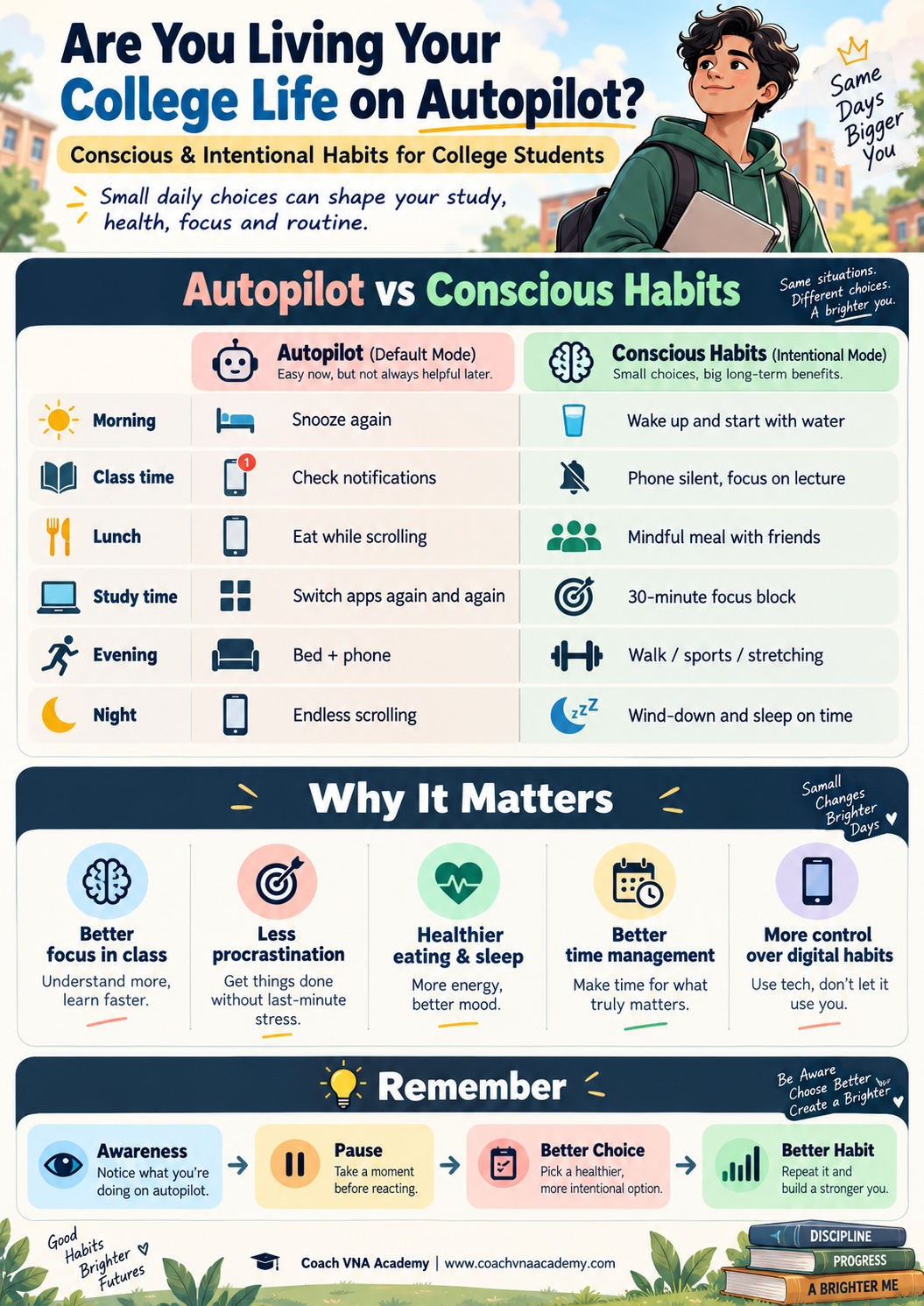
Conscious vs Autopilot Activities in College Life
| College Situation | Autopilot Activity | Conscious & Intentional Activity |
| Morning alarm | Baar-baar snooze karna | Fixed time par uthne ka effort |
| After waking | Bed par social media scroll | Water, stretching ya quiet breathing |
| Breakfast | Breakfast skip | Time manage karke meal lena |
| College travel | Continuous Reels | Music, podcast, revision ya quiet travel |
| Classroom | Notifications repeatedly check | Phone silent karke active listening |
| Free period | Random scrolling | Library, revision, walking ya planned break |
| Lunch | Phone ke saath fast eating | Meal aur conversation par attention |
| Study time | Multiple apps + studying | Focused study block |
| Stress | Avoidance aur scrolling | Pause, breathing aur action plan |
| Evening | Bed + phone | Walk, sports, gym, yoga ya stretching |
| Snacks | Boredom mein eating | Hunger notice karke food choose |
| Assignment | Deadline tak postpone | Task ko small parts mein divide |
| Friends | Conversation mein phone | Active listening |
| Night | Endless scrolling | Screen reduce karke wind-down routine |
| Sleep | Random bedtime | Mostly consistent sleep schedule |
Why College Students Easily Enter Autopilot Mode
College life school life se kaafi different hoti hai. School mein routine usually more structured hota hai, whereas college mein students ko comparatively zyada freedom milti hai. As a result, daily decisions ka responsibility bhi student par zyada aa jata hai.
- Kab study karna hai
- Assignment kab complete karna hai
- Phone kitna use karna hai
- Kya eat karna hai
- Exercise karni hai ya nahi
- Free period kaise spend karna hai
- Friends ke saath kitna time spend karna hai
- Raat ko kitne baje sona hai
On one hand, ye freedom independence develop karne mein help karti hai. On the other hand, agar routine consciously plan na kiya jaye, to daily activities easily random pattern mein convert ho sakti hain.
For instance, free period mein student initially sirf 5 minutes phone check karne ka plan karta hai. However, bina notice kiye wahi 5 minutes 30 minutes ki scrolling ban sakte hain.
Similarly, assignment difficult lage to student usse “baad mein” karne ka decision le sakta hai. Gradually, procrastination repeat hote-hote regular habit ban sakti hai.
Therefore, problem freedom mein nahi hai. Real challenge ye hai ki student apni freedom ko intentional choices ke saath kaise use karta hai.
In simple words:
Freedom + Awareness = Better Choices
Freedom + Autopilot = Unplanned Habits
1. Morning Ko Phone Se Nahi, Awareness Se Start Karein
Bahut students ka first morning action hota hai: phone check. Alarm band karte hi WhatsApp, Instagram, notifications aur short videos start ho jaate hain. Kabhi-kabhi student bed se uthne se pehle hi mentally overloaded feel karne lagta hai.
Instead, first 10-15 minutes consciously use karne ki practice karein:
- Wake up
- Water drink karein
- Natural light mein aayein
- 2-5 minutes shaant hokar baithkar apni breathing par dhyan dein
- Light stretching karein
- Din ki main priorities review karein
Goal complicated morning routine banana nahi hai. Goal hai: Day ka first decision khud lena, notification ko lene dena nahi.
2. Meditation Ko Complicated Mat Banaiye
Meditation sunte hi kuch students imagine karte hain: 30 minutes silence, perfect posture, no thoughts. Ye necessary nahi hai.
College student simple 2-5 minute mindful breathing se start kar sakta hai. Suppose aapki presentation 10:00 AM hai aur 9:50 AM par nervous feel ho raha hai. Agar presentation se pehle mind baar-baar negative soch raha ho, to kuch minutes pause karein aur slow, steady breathing par focus karein. Breath in. Breath out. Thought aaye? Fine. Attention gently breathing par wapas.
Meditation ka practical purpose ho sakta hai: immediate reaction aur thoughtful response ke beech small pause create karna.
3. Exercise Ka Matlab Sirf GYM Nahi Hai
College students frequently kehte hain: “Exercise ke liye time nahi milta.” Lekin physical activity ka meaning sirf one-hour gym session nahi hota.
- Campus walking
- Lift ki jagah stairs
- Cycling
- Sports
- Yoga
- Jogging
- Room mein stretching
- Dance
- Evening walk
Suppose aap two hours continuously library mein baithe hain. Short walking break bhi useful ho sakta hai. Goal hai: Daily routine mein body movement ko consciously include karna.
4. Healthy Eating Ka Meaning “Perfect Diet” Nahi Hai
College students ke liye diet manage karna challenging ho sakta hai – hostel mess, college canteen, busy lectures, practicals, travel, budget, friends ke plans aur late-night study sab contribute karte hain.
Make the Better Available Choice
| Instead of… | Try… |
| Breakfast repeatedly skip karna | Available balanced breakfast lena |
| Water intake ignore karna | Water bottle carry karna |
| Bored hote hi snacks | Pehle ask karein: “Kya mujhe actually hunger hai?” |
| Meal + continuous scrolling | Kuch meals phone-free rakhna |
| Conscious eating ka simple question: “Main genuinely hungry hoon ya sirf bored/stressed hoon?” |
5. Study Hours Se Zyada Study Attention Matter Karta Hai
Imagine Riya kehti hai: “Main kal 5 hours padhi.” Reality: book 5 hours open thi, lekin actual focused study maybe much less. Baaki time WhatsApp, music selection, Instagram, snacking, random browsing, roommate conversation aur phone calls mein nikal gaya.
Try a 30-Minute Focus Method
- One specific task choose karein – example: Chapter 4 ke pages 30-42 revise karne hain.
- Phone silent/away.
- 30 minutes sirf selected task.
- Short break.
- Next focused block.
| Goal: Study ke time genuinely study karein. Break ke time genuinely break lein. |
6. Procrastination Ko Small Tasks Se Break Karein
Assignment ka title dekhkar stress aa raha hai? Common response: “Baad mein karunga.” Phir deadline close, stress increase, sleep reduce aur quality compromise.
Poore assignment ko ek saath complete karne ke pressure ke bajay, use chhote aur manageable steps mein divide karein:
- Topic read karna
- Instructions understand karna
- Resources collect karna
- Introduction draft karna
- First section complete karna
- References check karna
- Final editing
Big task ko small steps mein divide karne se starting easier lag sakti hai. Motivation ka wait karne se better hai small action start karna.
7. Smartphone Ko Tool Banaiye, Default Activity Nahi
Phone college students ke liye useful hai – notes, learning videos, PDFs, communication, maps, banking, calendar, online classes aur AI tools. Problem phone nahi hai. Problem ho sakti hai automatic checking.
Aap PDF open karne phone uthate ho. Notification dikhti hai. Message check. Instagram. Reels. 20 minutes gone. Solution phone quit karna nahi hai. Solution intentional use hai.
- Study time mein silent mode
- Unnecessary notifications off
- Social apps ko home screen se remove
- Meals ke time phone side mein
- Bedtime scrolling reduce
- Screen-time report occasionally review
| Ask: “Main phone use kar raha hoon ya phone mera attention use kar raha hai?” |
8. Breaks Ko Guilt-Free Rakhein
Intentional living ka meaning har minute productive hona nahi hai. College students ko rest bhi chahiye. Break means friend ke saath chai, music, walk, sports, movie, gaming, nap, college event, hobby ya relaxation.
Difference ye hai ki break consciously choose kiya gaya ho. Conscious break: ‘Main 30 minutes gaming enjoy karunga, aur uske baad assignment par wapas focus karunga.’ Unplanned break: “Bas 5 minutes game…” aur two hours gone.
Rest problem nahi hai. Unplanned loss of time problem ban sakta hai.
9. Conscious Friendship Develop Karein
College life ka important part friendship hai. Lekin ek common scene dekhiye: four friends ek table par baithe hain, sab apne phone par. Physically together, mentally somewhere else.
Try small habit: meal ke first 10-15 minutes phones side mein. Friend baat kare to actively listen. Eye contact. Questions ask karein. Real conversation.
Healthy student life sirf marks nahi hai. Meaningful relationships bhi wellness ka important part hain.
10. Stress Mein Immediate Reaction Se Pehle Pause Karein
Suppose internal exam marks expected se low aaye. Automatic reaction: “Mujhse nahi hoga.” Friend ke marks check. Comparison. Stress. Scrolling. Avoidance.
Intentional response: pause, paper dekho, mistakes identify karo, teacher se clarification lo aur next exam ke liye strategy banao. Ek disappointing result aapki complete ability define nahi karta.
| Better question: “Is result se main kya learn kar sakta hoon?” |
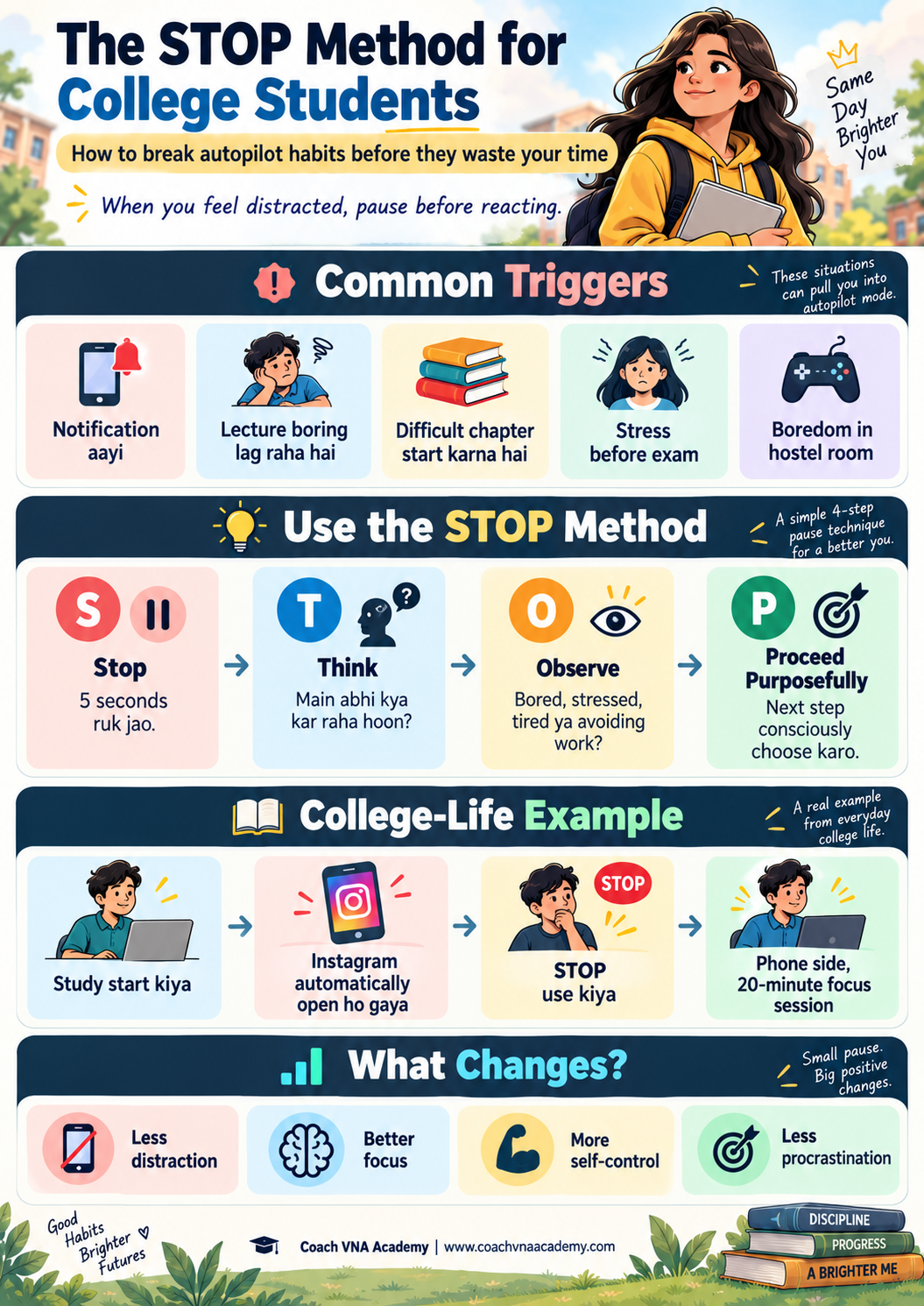
Try the STOP Method
| Step | What to Do |
| S – Stop | 5 seconds pause. |
| T – Think | Ask: “Main abhi kya kar raha hoon?” |
| O – Observe | Bored? Hungry? Tired? Stressed? Distracted? Difficult work avoid kar rahe hain? |
| P – Proceed Purposefully | Ab next action consciously choose karein. |
Example: exam preparation chal rahi hai aur automatically Instagram open ho gaya. STOP. Ask: “Instagram kyun open kiya?” Maybe answer ho: “Chapter difficult lag raha tha.” Phone side mein rakhein aur chapter ka one small section start karein. Small pause. Better decision.
11. Sleep Routine Ko College Success Ka Part Samjhein
Students often sleep sacrifice karte hain because of assignments, exams, web series, gaming, social media aur late-night conversations. Occasional late nights college life ka part ho sakti hain, lekin daily irregular routine student ke daytime functioning ko affect kar sakti hai.
- Similar bedtime maintain karna
- Bed par unnecessary scrolling reduce karna
- Next-day essentials earlier prepare karna
- Assignment last minute par na chhodna
- Late caffeine intake par awareness rakhna
- Sleep ko waste of time treat na karna
Rested mind learning ke liye important hai.
12. Daily Planning Ko Complicated Mat Banaiye
20-item to-do list banana impressive lagta hai. Complete na ho to frustration. Instead, try Daily Top 3 Method.
| Today’s Top 3 | Example |
| 1 | Important lecture attend karna |
| 2 | Assignment ka first section complete karna |
| 3 | 30-minute physical activity |
Extra tasks ho jayein? Great. Nahi hue? Main priorities still clear thi. Simple planning sustainable hoti hai.
Sample Conscious Routine for College Students
| Approx. Time | Conscious Activity | Purpose |
| Morning | Wake up, water, light stretching | Calm start |
| Morning | 3-5 minute breathing/meditation | Awareness |
| Breakfast | Balanced meal when available | Energy |
| Travel | Podcast, music, revision or quiet travel | Intentional use of time |
| Lectures | Active listening + notes | Learning |
| Short break | Water + movement | Refresh |
| Lunch | Mindful meal + friends | Nutrition + connection |
| Free period | Library/task/revision | Productivity |
| After college | Rest + exercise/walk/sports | Recovery |
| Evening | Focused study blocks | Academic work |
| Dinner | Meal with reduced screen use | Mindful eating |
| Night | Light review / prepare next day | Organisation |
| Before sleep | Reduce scrolling | Better wind-down routine |
Note: Ye fixed timetable nahi hai. Har student’s class schedule, commute, hostel routine aur responsibilities different hoti hain.
13. Financial Habits Bhi Conscious Hone Chahiye
College life mein many students first time independent spending start karte hain. Small expenses – coffee, snacks, food delivery, subscriptions, cab aur impulse shopping – individually small lagte hain. Monthly total surprising ho sakta hai.
Simple practice: weekly expenses review. Categories bana sakte hain: food, travel, entertainment, education, shopping and savings.
| Ask: “Kya main ye purchase consciously kar raha hoon ya impulse mein?” |
14. Comparison Habit Ko Notice Karein
College student jab social media open karta hai, to usse doosron ki achievements continuously dikhai deti hain. Kabhi koi friend internship start kar raha hota hai, to kabhi kisi ke high marks nazar aate hain. Kisi aur ki foreign trip exciting lagti hai, while another student seems to have a perfect-looking routine. At the same time, koi startup launch kar raha hota hai ya new achievement share kar raha hota hai.
In sab updates ko dekhkar mind mein suddenly thought aa sakta hai:
“Main life mein peeche hoon.”
Lekin, social media usually kisi person ki complete life nahi dikhata; mostly achievements aur selected highlights hi nazar aate hain. Isliye, apni everyday reality ko kisi aur ke online highlights se compare karna unnecessary stress create kar sakta hai.
Comparison automatically start ho jaye, to us moment ko notice karein. Instead of comparing yourself with others, attention ko apne current goal par wapas laayein.
Better conscious question:
“Mera current goal kya hai, aur aaj main uske liye ek practical step kya le sakta hoon?”
Is tarah, focus comparison se gradually personal progress aur action ki taraf shift hota hai.
Autopilot Habits ke Possible Disadvantages
| Autopilot Habit | Possible Effect |
| Excessive scrolling | Study time reduce ho sakta hai |
| Breakfast repeatedly skip | Morning routine affect ho sakti hai |
| No physical movement | Sedentary lifestyle increase |
| Poor posture | Discomfort develop ho sakta hai |
| Procrastination | Deadline stress |
| Late-night phone use | Sleep routine disturb |
| Random spending | Budget problems |
| Mindless eating | Food awareness reduce |
| Constant multitasking | Focus difficult feel ho sakta hai |
| Phone during conversations | Real interaction reduce |
| No planning | Important tasks miss |
| Constant comparison | Unnecessary stress increase ho sakta hai |
Conscious & Intentional Habits Every College Student Can Practice
| Habit | Simple Student Example |
| Mindful waking | Uthte hi phone avoid |
| Hydration | College water bottle carry |
| Meditation | 3-5 minutes breathing |
| Exercise | Walk, sports, gym or yoga |
| Mindful eating | Meal ke time scrolling reduce |
| Healthy meal timing | Meal unnecessarily delay na karna |
| Focused study | Distraction-free study block |
| Time blocking | Study, break and leisure plan |
| Active breaks | Study ke beech stretching |
| Digital awareness | Notifications manage |
| Journaling | Night mein short reflection |
| Gratitude | Daily positive things notice |
| Active listening | Friend speaking -> phone side |
| Financial awareness | Weekly expense check |
| Sleep routine | Similar bedtime |
| Decluttering | Study desk organise |
| Goal setting | Daily Top 3 |
| Self-reflection | “Aaj time kahan gaya?” |
| Learning habit | Skill-learning session |
| Intentional relaxation | Planned break |
Your 7-Day Conscious Living Challenge
Life completely change karne ki try mat karein. Just ONE habit choose karein.
- Morning scrolling
- Breakfast skipping
- Excessive social media
- No exercise
- Study distractions
- Late-night scrolling
- Random spending
- Procrastination
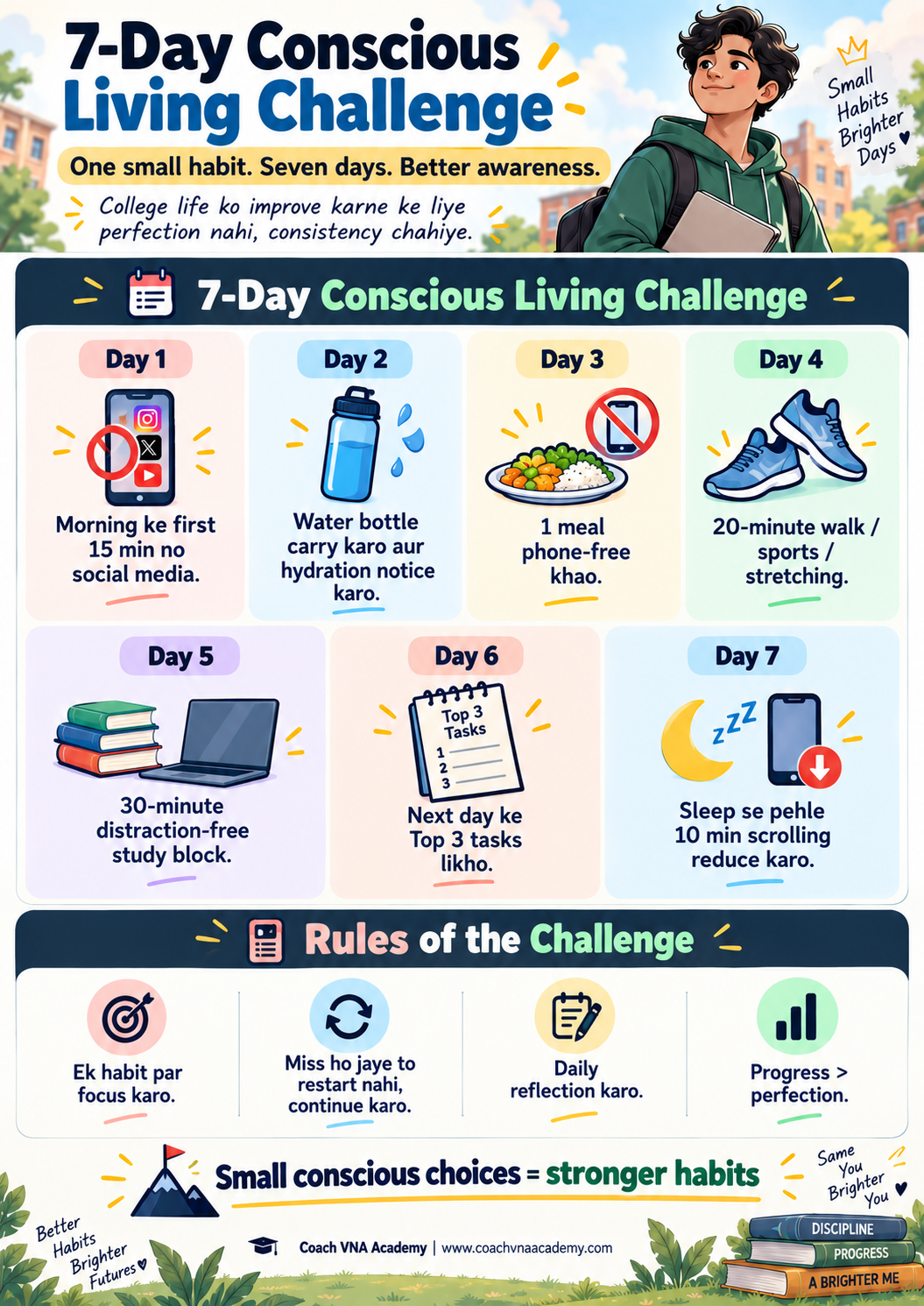
| Old Habit | New Conscious Habit |
| Morning uthte hi Instagram | First 15 minutes no social media |
| Study ke beech repeatedly WhatsApp check | 30-minute focused study -> then messages |
| Entire day no exercise | 20-minute evening walk |
| Assignment last night par start | Deadline se pehle first 20-minute session |
| Remember: Goal perfection nahi. Goal awareness hai. |
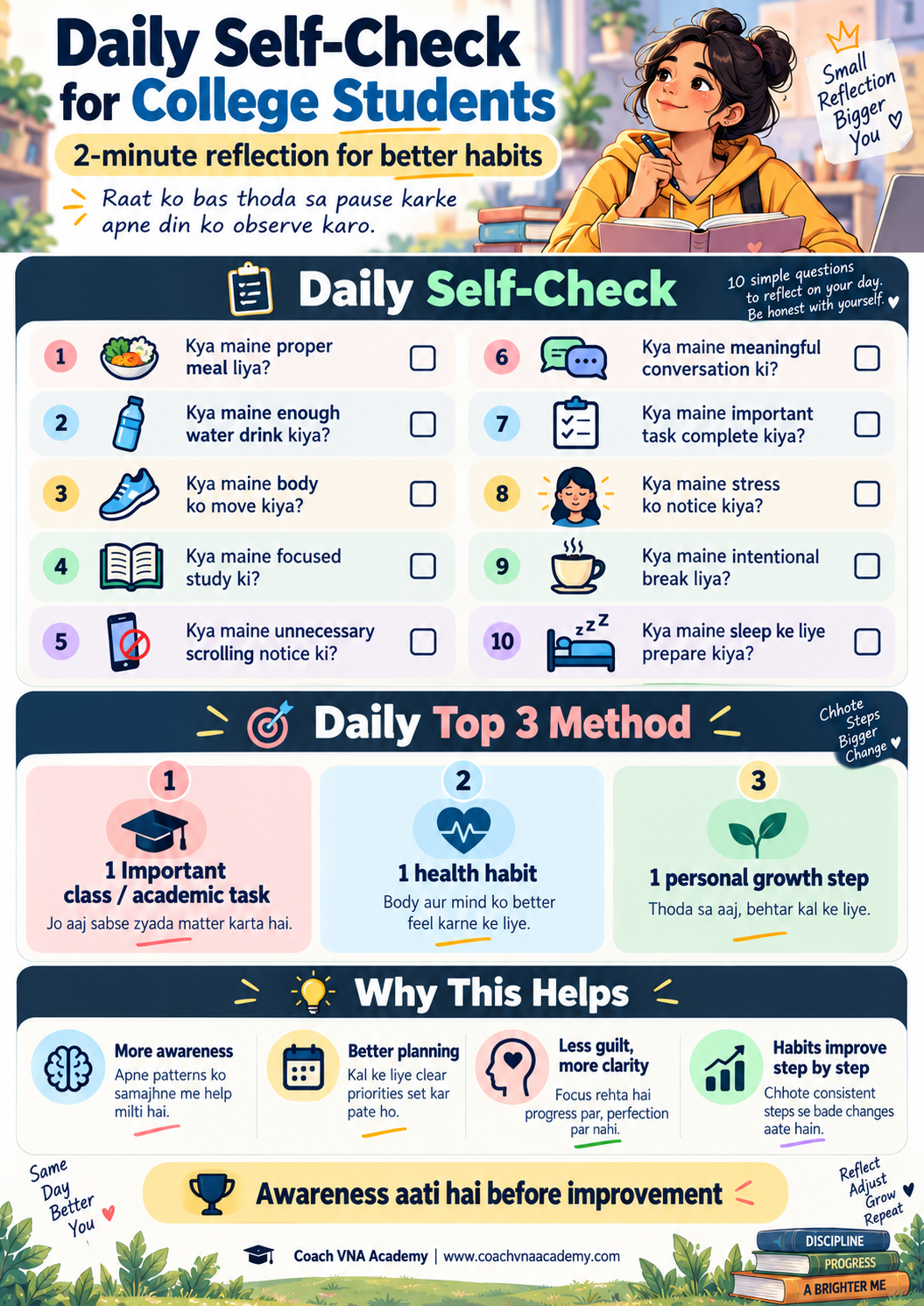
Daily Self-Check for College Students
| Daily Reflection Question | Yes / No |
| Kya maine proper meal liya? | [ ] |
| Kya maine enough water drink kiya? | [ ] |
| Kya maine body ko intentionally move kiya? | [ ] |
| Kya maine focused study ki? | [ ] |
| Kya maine unnecessary scrolling notice ki? | [ ] |
| Kya maine meaningful conversation ki? | [ ] |
| Kya maine important task complete kiya? | [ ] |
| Kya maine stress ko notice kiya? | [ ] |
| Kya maine intentional break liya? | [ ] |
| Kya maine sleep ke liye properly prepare kiya? | [ ] |
Is checklist ka goal guilt create karna nahi hai. Goal hai: awareness create karna.
Aarav Ki Story – One Week Later
Remember Aarav? Wahi student jo morning late uthta tha, breakfast skip karta tha, lecture mein phone dekhta tha, evening mein procrastinate karta tha aur late-night scrolling karta tha.
Usne life completely change nahi ki. Usne sirf three small habits start ki:
- Habit 1: Morning ke first 15 minutes no Instagram.
- Habit 2: College se aane ke baad 20-minute walk.
- Habit 3: Night mein next day ke Top 3 tasks likhna.
First week perfect nahi tha. Ek din late utha. Ek din exercise miss hui. Weekend par extra scrolling bhi hui. But one thing changed: ab Aarav notice kar raha tha.
| Earlier: Trigger -> Automatic Action | Now: Trigger -> Awareness -> Choice |
Aur conscious living ka real starting point wahi hai.
Final Thought: College Sirf Degree Nahi, Habits Bhi Deta Hai
Age 18-25 years life ka important transition period hota hai. Isi period mein students gradually study habits, food habits, exercise habits, sleep habits, money habits, digital habits, work habits, relationship habits aur stress-management habits develop karte hain.
College ke baad sirf degree saath nahi jaati. Aapki habits bhi saath ja sakti hain.
Isliye conscious living ka matlab perfect lifestyle banana nahi hai. It means: pause enough to choose instead of always reacting automatically.
| Next time jab aap bina reason phone unlock karein – bas one second pause. Ask: “Main ye consciously kar raha hoon ya sirf habit mujhe chala rahi hai?” |
Coach VNA Academy Takeaway
| Awareness -> Pause -> Conscious Choice -> Repetition -> Better Habit |
Aapko ek din mein perfect student banne ki zarurat nahi hai. Start with one conscious choice. Then repeat. Because sustainable change often starts with small daily actions.
Be Aware. Be Intentional. Build Better Habits.