
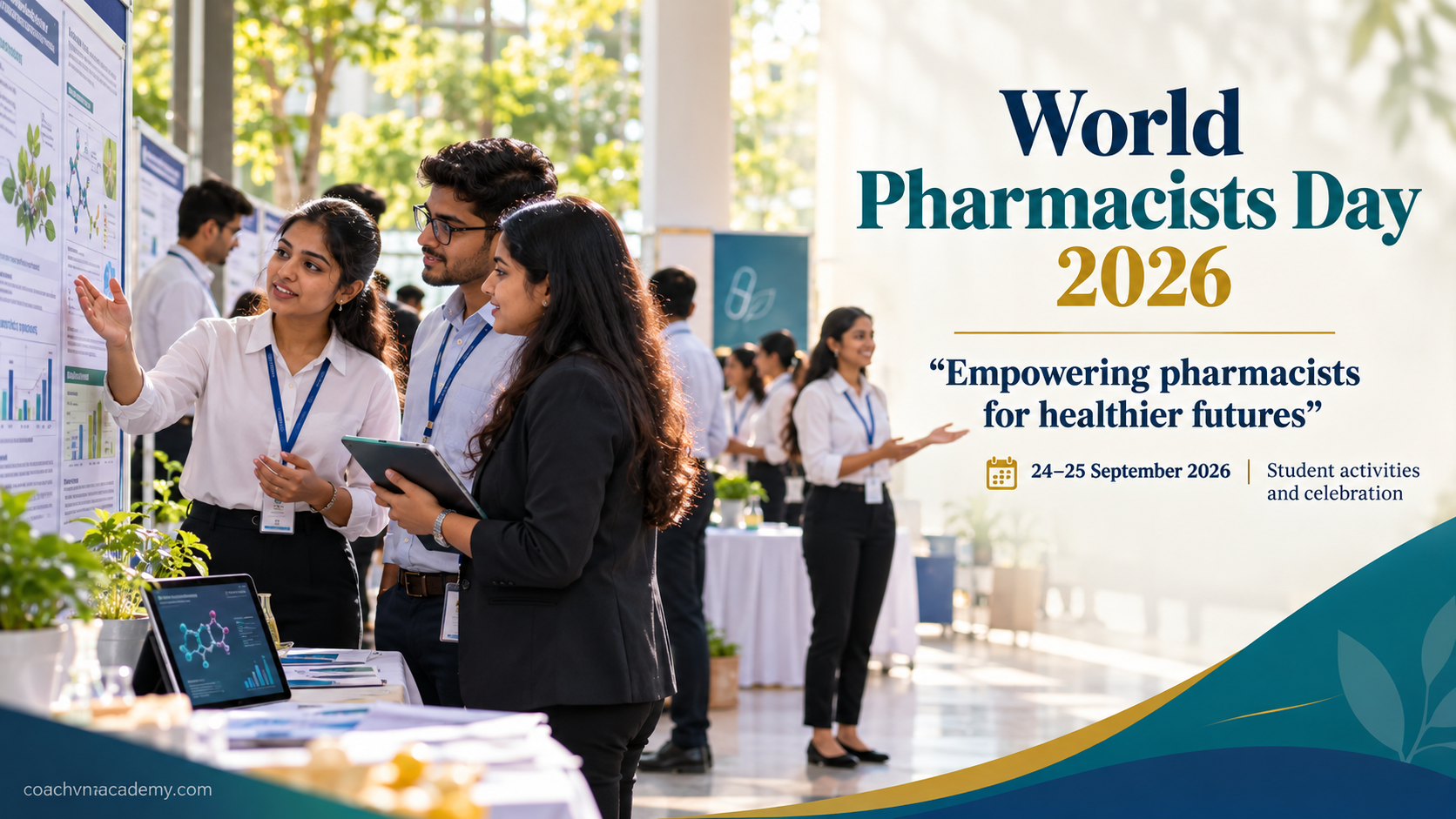
Preparing, participating and learning under the theme “Empowering pharmacists for healthier futures”
A few days before World Pharmacists Day, Kavya saw the list of college activities: oral presentations, Rx Reel, an AI and Innovation Challenge, poster presentations and guest lectures.
She wanted to participate, but one question bothered her. If someone outside college asked, “Why do you celebrate World Pharmacists Day?”, could she explain it without repeating a line she had memorised?
That question matters. This event is a chance for pharmacy students to understand the profession they are preparing to enter—and to explain its value to other people.
What Is World Pharmacists Day?
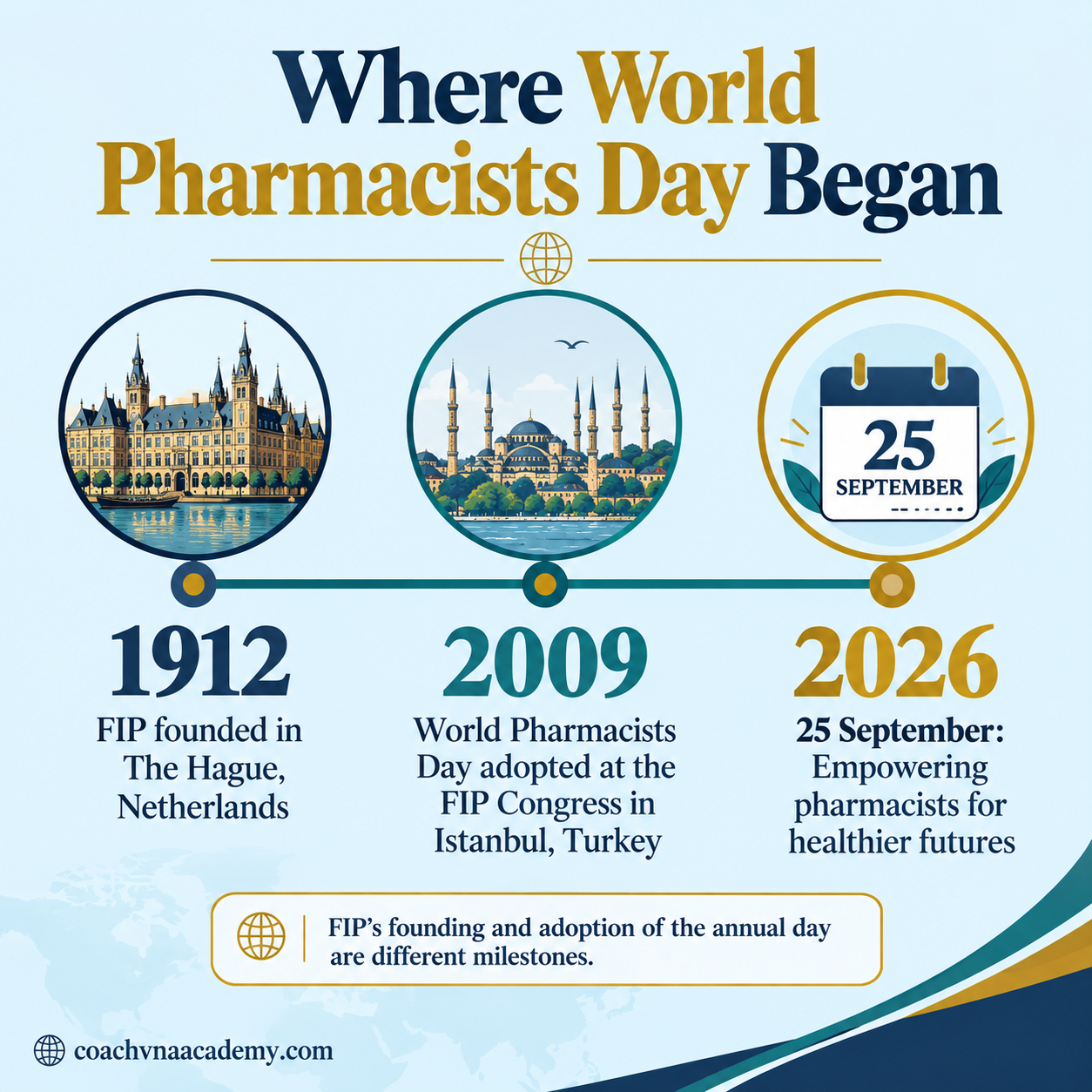
World Pharmacists Day is observed globally on 25 September. It recognises pharmacists’ contribution to health and gives the profession an opportunity to show the public what pharmacists do. The campaign is led by the International Pharmaceutical Federation (FIP).
Its history involves two countries. FIP was founded on 25 September 1912 in The Hague, the Netherlands. Its Turkish members later suggested that anniversary as the date for World Pharmacists Day. FIP adopted the annual observance at its 2009 world congress in Istanbul, Turkey. In simple terms, the date comes from FIP’s founding in the Netherlands; the decision to establish the day was made in Turkey.
The 114-year connection may feel distant to a student today. Yet it tells a straightforward story: pharmacy has a long professional history, while the work pharmacists do keeps changing with people’s health needs.
Want to explore how the celebration and its themes developed? Read the downloadable World Pharmacists Day History and Themes guide accompanying this article.
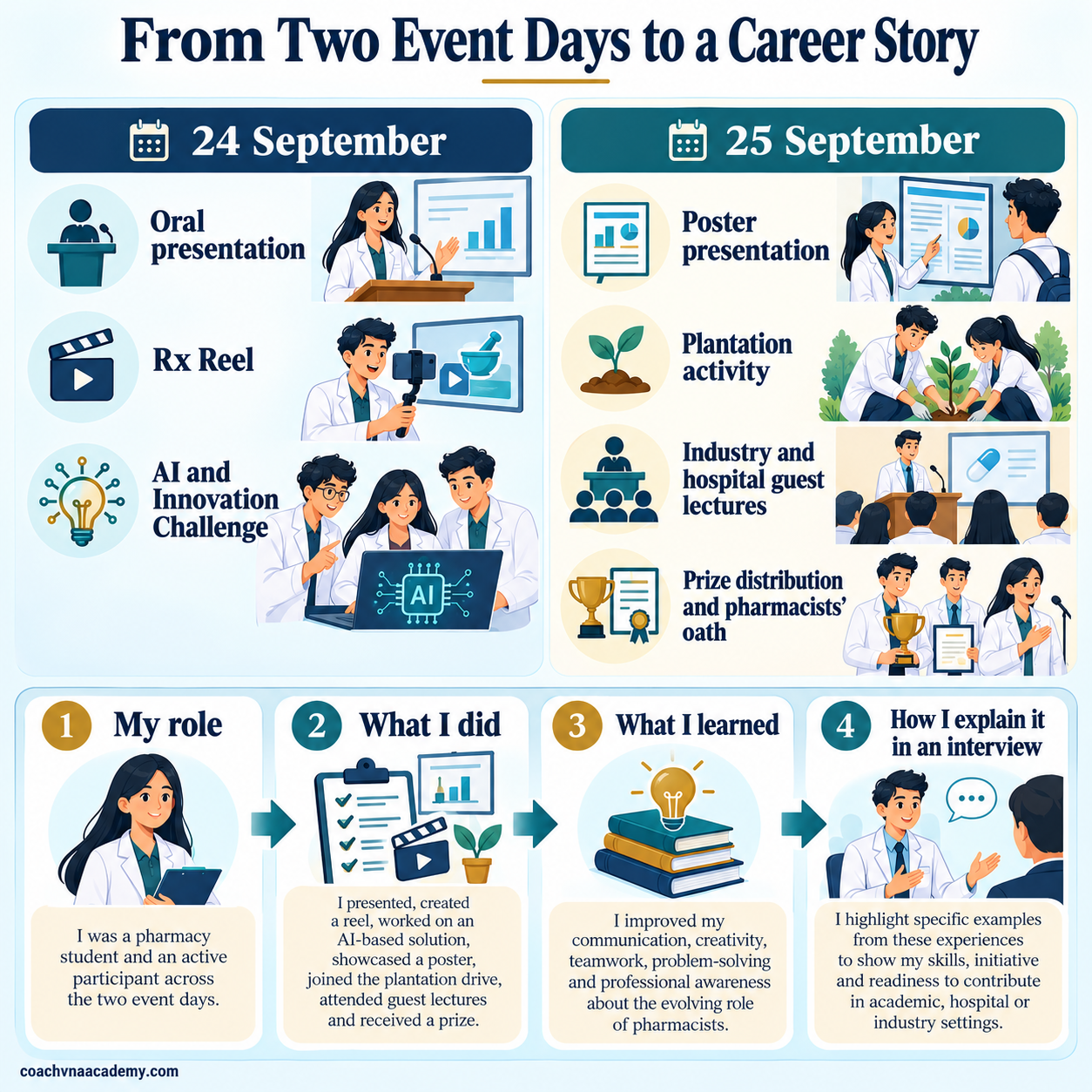
Your college’s activities take place on 24 and 25 September 2026. The first day gives students opportunities to present and compete; the second includes posters, guest lectures and the formal World Pharmacists Day celebration.
Why Does This Day Matter to Society?
A person receives several medicines but is unsure how to take them. A parent struggles to understand the instructions for a child’s medicine. After leaving hospital, another patient thinks of questions they forgot to ask. In each situation, a pharmacist can help the person understand how to use medicines safely.
Medicines can help people only when they are available, meet quality standards and are used appropriately. Depending on where they work, pharmacists contribute by supplying medicines, explaining their use, identifying medicine-related concerns and working with other healthcare professionals. Pharmaceutical professionals also contribute to research, manufacturing, quality and regulation.
This is why the day has value beyond a college celebration. It helps the public see the people and expertise involved in the journey from a medicine’s development to its responsible use. FIP uses World Pharmacists Day to make pharmacists’ contributions to better health more visible.
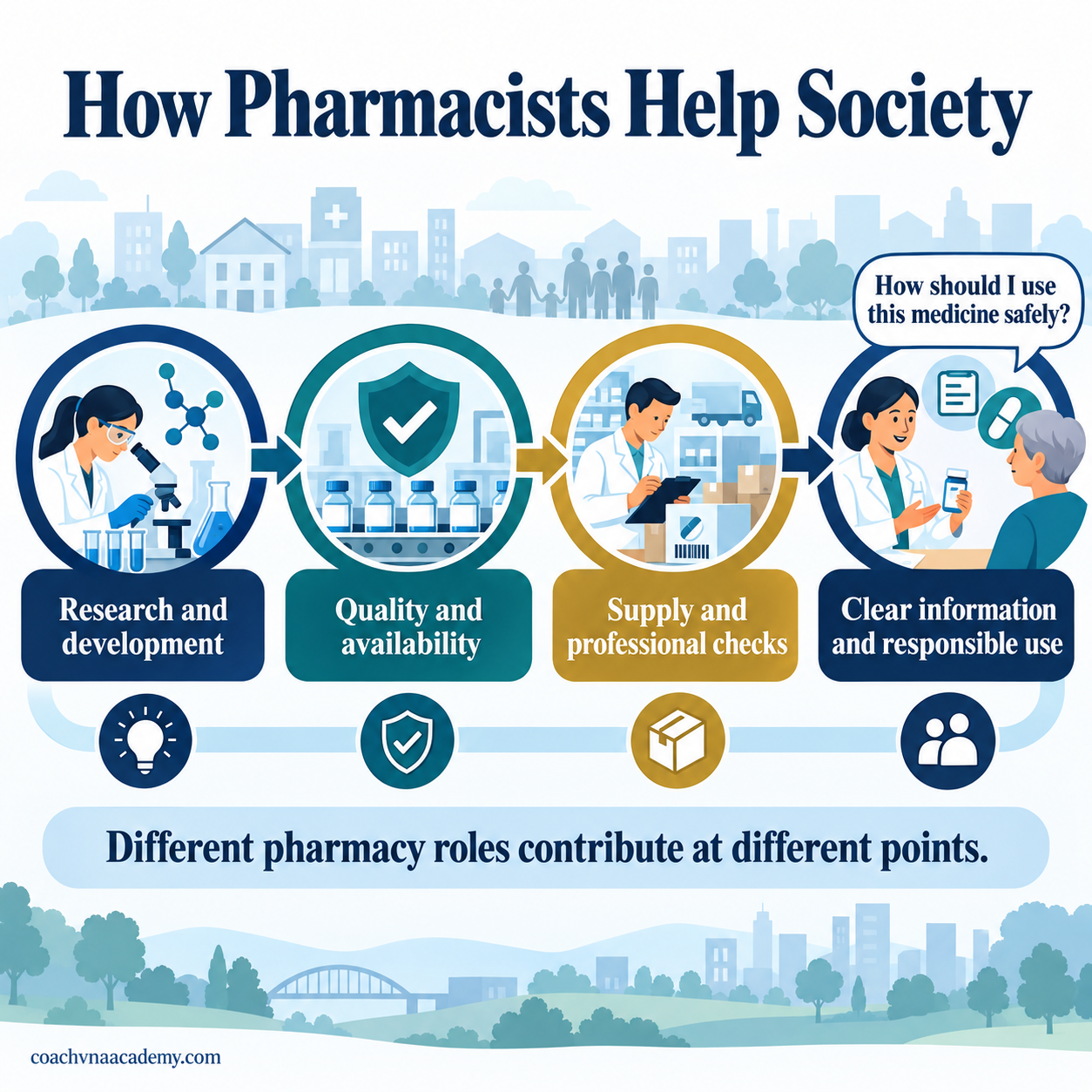
If a friend asks why pharmacists matter, you could say: “A patient needs more than a medicine in a packet. They need reliable quality, clear information and help using it responsibly. Pharmacists contribute at different points in making that possible.”
That is a professional explanation because it starts with a person’s need, rather than a list of subjects studied in college.
What Does the 2026 Theme Mean?
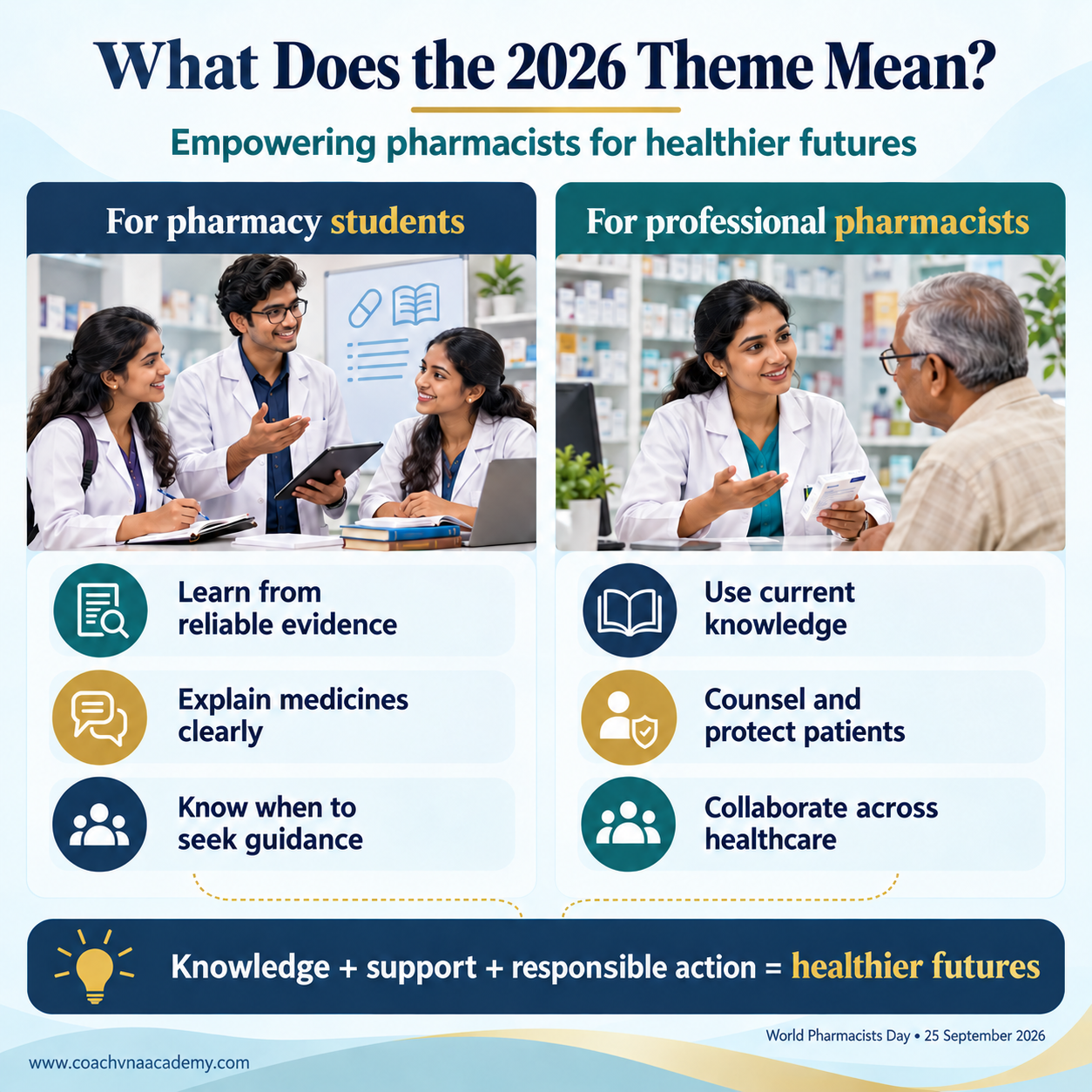
The official theme for World Pharmacists Day 2026 is “Empowering pharmacists for healthier futures.” It carries a message for both pharmacy students and practising pharmacists. People benefit when pharmacists have the knowledge, confidence, resources and support to use their skills effectively. FIP also calls for collaboration and trust across healthcare so the pharmacy workforce can contribute fully. www.fip.org
What Does “Empowering” Mean for a Pharmacy Student?
As a student, you are still learning. You do not need to know the answer to every medicine-related question today. Empowerment begins when you learn how to find a reliable answer, explain it clearly and recognise when you need guidance.
Think about a patient who says, “I stopped taking my tablets because I felt better.” You could repeat a definition from a textbook. But a professional response begins by listening: Which medicine? What was it prescribed for? How long was the patient advised to take it? You would then refer the concern to a qualified pharmacist or prescriber as appropriate. The skill is more than remembering facts. It is knowing how to use them responsibly.
Your college experiences can help you practise this approach. An oral or poster presentation teaches you to explain evidence. An Rx Reel challenges you to make medicine information clear to the public. An AI and Innovation Challenge asks you to solve a healthcare problem while checking the accuracy and limits of the tool you propose. Volunteering teaches coordination, accountability and communication. Each activity is a chance to move from “I studied this topic” to “I can explain why it matters to someone.”
What Does It Mean for a Professional Pharmacist?
For a practising pharmacist, empowerment means having the training, time, tools and professional support needed to provide safe, effective care. Depending on the role and local regulations, that may include checking prescriptions, identifying possible medicine-related problems, counselling patients, supporting appropriate medicine use, maintaining medicine quality or contributing to research and public health.
Imagine an older patient taking several medicines who is confused about when to take each one. A pharmacist can listen, review the information available, explain the instructions in simple language and coordinate with the prescriber when a concern needs clarification. That conversation may help the patient use medicines more safely. It also shows why a pharmacist needs current knowledge, good communication and the opportunity to work with other healthcare professionals.
The theme therefore speaks to people beyond the pharmacy profession. Healthcare organisations, policymakers, other professionals and the public all have a part in making effective collaboration possible. www.fip.org
How Do These Two Stages Connect?
Students prepare to earn trust; professional pharmacists put that trust into practice every day. The link between them is a habit: listen carefully, check the evidence, explain clearly, act within your competence and keep learning.
If someone asks you what the 2026 theme means, you could say:
“It means helping pharmacists develop and use their skills so they can support safer medicine use and better health. For students like us, that journey starts with learning to turn knowledge into responsible action.”
Preparation Begins Four to Five Days Before the Event
Preparation becomes easier to understand when each team knows its task and why it matters. The examples below describe responsibilities that can be shared among students and supervised by faculty.
| When | Students or team | Practical task and learning |
| 4–5 days before | Organizing Committee and Student Coordinator | Confirm activities, locations, rules and contacts; practise planning and clear updates. |
| 4–5 days before | Invitation Committee | Prepare and verify invitations; practise respectful, accurate communication. |
| 2–3 days before | Student Volunteers and Decoration Volunteers | Check registration, signs and presentation spaces; practise teamwork and visitor support. |
| During and after competitions | Result analysis volunteers | Compile judges’ scores and check totals before results are announced; practise accuracy and fairness. |
| Before distribution | Certificate Writing Committee and certificate volunteers | Verify names, event titles and awards; practise careful record checking. |
The learning starts before the first presentation. The Organizing Committee brings the activities together, while the Student Coordinator helps faculty members and students stay informed. The Invitation Committee checks and sends invitations. Decoration Volunteers prepare the spaces, and Student Volunteers help participants and visitors find their way.
Other students support tasks that require particular care. Result analysis volunteers compile competition scores. The Certificate Writing Committee and certificate volunteers check names, event titles and award details before certificates are distributed.
A student who verifies a name, communicates a change in presentation order or guides a visitor is practising accuracy, teamwork and calm communication. Those contributions deserve attention, even when they happen away from the stage.
Day One: 24 September – Share an Idea
The first day includes oral presentations, Rx Reel and the AI and Innovation Challenge.
An oral presentation tests whether you can explain an idea you understand. Questions from the audience or judges can be useful, including the ones you cannot answer immediately. Saying “I need to check that before giving an answer” shows better judgement than guessing.
Rx Reel asks students to communicate a message dedicated to pharmacists through a short video. Before sharing one, check that its medicine or health information is accurate. A short, engaging message still carries responsibility.
The AI and Innovation Challenge invites students to identify a real problem and propose a solution. A thoughtful team will explain what its idea could improve and where human checking remains necessary. If an AI tool gives medicine information, for example, students should be able to discuss who verifies it before anyone relies on it.
You can learn even when you are part of the audience. Listen for explanations that make a difficult idea easier to understand. Notice how presenters respond when someone asks an unexpected question.
Day Two: 25 September – See the Profession More Clearly
The second day begins with poster presentations. Explaining a poster to a visitor is different from reading it aloud: you need to find out what the person wants to know and guide them through the main point.
A plantation activity and the formal celebration follow. Guest lectures from industry and hospital resource persons can help students connect classroom learning with professional work. As you listen, choose one question to take away: What problem does this professional solve, and what would I need to learn to contribute in that setting?
Prize distribution recognises student work. The pharmacists’ oath then offers a moment to think about the responsibility attached to medicine knowledge. The programme closes, but students’ learning need not end there.
How Can This Experience Help Your Future Career?
A useful résumé point begins with a real task. The table shows how students can turn participation into a specific, truthful example; the wording should be adjusted to match what each student actually did.
| Event role | Record the evidence | Possible interview explanation |
| Oral or poster presenter | Topic, sources used, questions answered and feedback received. | “I explained my topic to visitors and learned to answer questions clearly.” |
| AI and Innovation Challenge participant | Problem explored, your contribution, checks and limits identified. | “I helped assess whether our idea was useful and what needed human review.” |
| Student coordinator or volunteer | People assisted, changes handled and your own responsibilities. | “I kept participants informed when the presentation order changed.” |
| Result or certificate volunteer | Entries or names checked and how errors were resolved. | “I checked records before results or certificates were released.” |
Within a day or two, record what you actually did during the event. Note your role, the task you completed, a difficulty you faced and what you learned.
“Participated in World Pharmacists Day” says little on a résumé. A student who coordinated poster entries might later explain how they maintained the list, communicated changes and supported presenters. An oral presenter might discuss how they researched a topic and responded to feedback. A volunteer who checked certificates might describe the accuracy needed when handling names and awards.
These are also useful examples for an interview, provided you can explain your own contribution honestly. A certificate can support the record; your account of the work shows what the experience taught you.
Take One Lesson Beyond the Celebration
When someone asks Kavya why World Pharmacists Day matters, she no longer needs a rehearsed definition. She can explain that it recognises the contribution of pharmacists to people’s health—and that the 2026 theme asks how the profession can be better prepared for future needs.
After 25 September, choose one action for yourself. Improve how you explain a topic. Explore a career area mentioned by a guest. Read more about an innovation you saw. Practise the skill that felt difficult during your presentation or volunteer role.
World Pharmacists Day can become one of the most valuable events of student life when you understand its purpose, contribute sincerely and carry something you learned into your next step.