
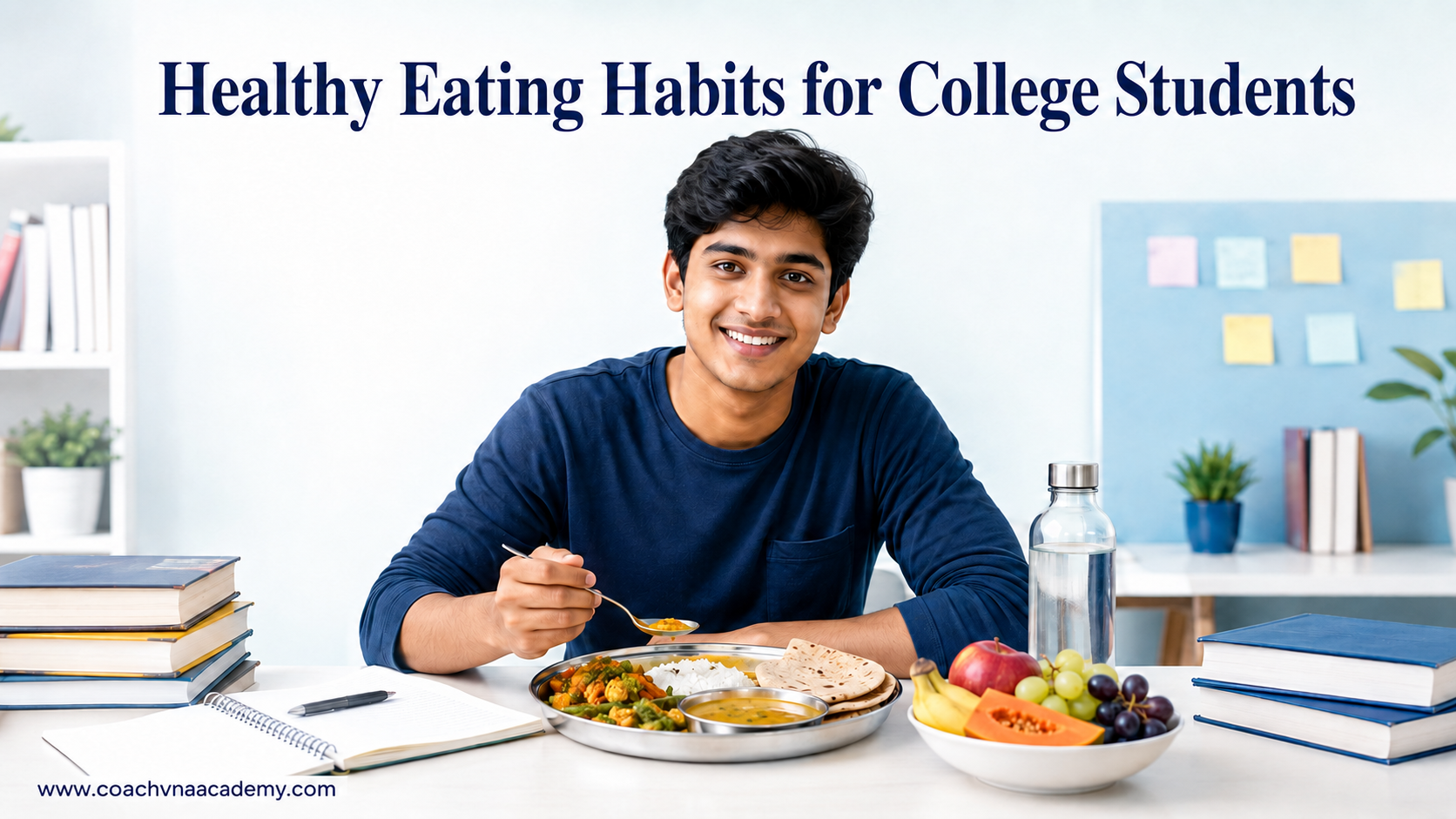
At 8:10 a.m., Aarav hurried out of his hostel with only a cup of tea. His first lecture began at 8:30, followed by a practical class. By noon, he felt tired and found it difficult to concentrate. He bought chips and a sugary drink for quick energy. The relief lasted briefly; soon, hunger and tiredness returned.
Aarav’s day is familiar to many college students. Early classes, laboratory sessions, commuting, hostel routines, assignments and limited budgets can quietly turn irregular eating into a habit. The solution is not an expensive “perfect diet.” It is a pattern of small, practical choices that fits real student life.
| Key message Aim for consistency, variety and balance—not perfection. One meal does not define the quality of an entire diet. |
What Does Healthy Eating Mean?
Healthy eating means choosing a diet that is adequate, balanced, moderate, diverse and safe. In everyday terms, it includes cereals or millets, pulses or other protein foods, vegetables, fruit, milk or suitable alternatives, nuts or seeds, and appropriate amounts of fats and oils.
Needs differ according to age, body size, activity, health status, culture, access and preference. Therefore, an online plate model is a flexible guide—not an individualized prescription. ICMR–National Institute of Nutrition and the World Health Organization both emphasize dietary variety, minimally processed foods, and limiting excess salt, free sugar and unhealthy fats.
Nutrition works with sleep, movement and emotional awareness to support student mental and emotional well-being.
Why This Matters During College Life
Food cannot guarantee high marks, but regular balanced meals can create better conditions for learning and daily functioning. They help students obtain energy, protein, fibre, vitamins, minerals and fluids for lectures, practical work, travel and study.
| Potential everyday benefit |
| More dependable energy across a long college day |
| A better opportunity to meet nutrient needs |
| Less dependence on sugary drinks and convenience snacks |
| Greater awareness of hunger, fullness and meal timing |
| A sustainable foundation for long-term health habits |
The Student-Friendly Balanced Plate
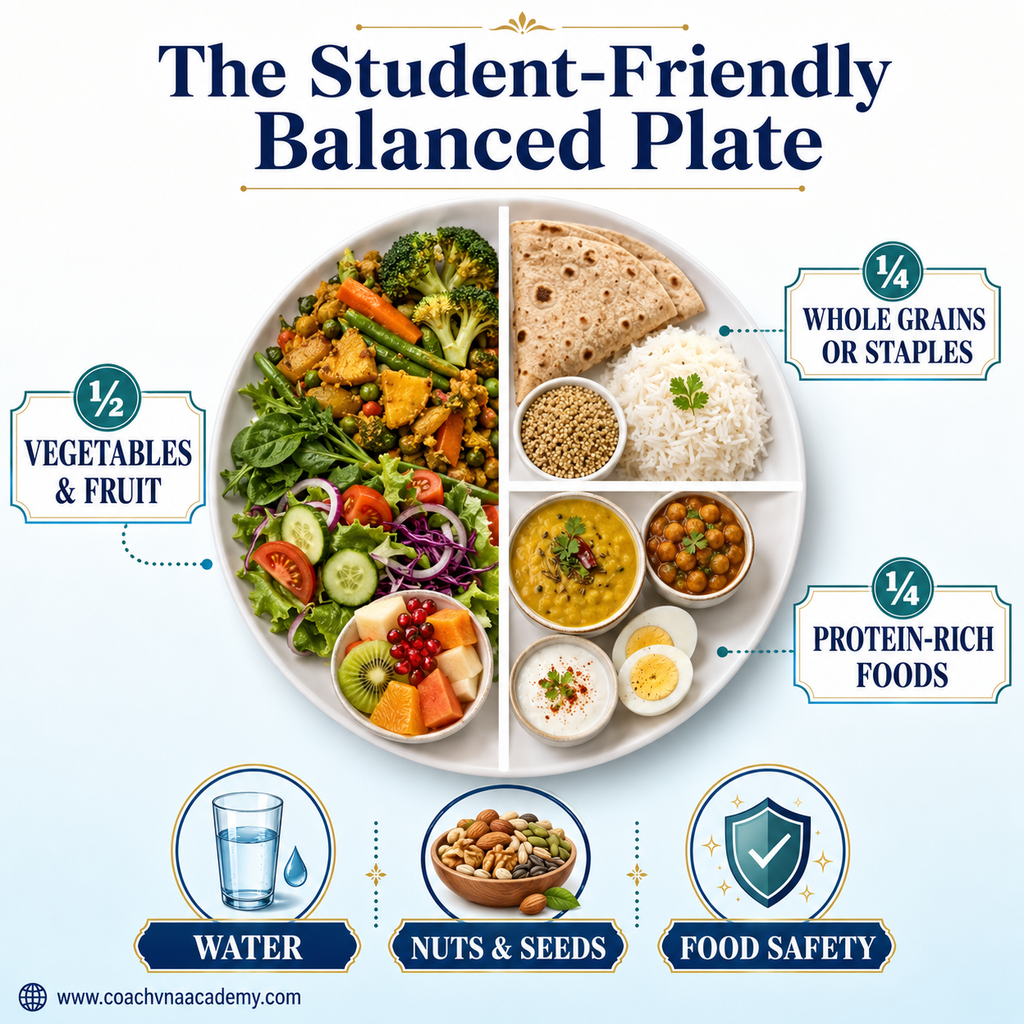
When Aarav looked at his lunch, he stopped asking, “Is this food perfect?” He asked a more useful question: “What is missing from this plate?”
| Plate area | Food role | Affordable Indian examples |
| About one-half | Vegetables and fruit | Seasonal sabzi, green leafy vegetables, salad when safe, guava, banana, orange, papaya |
| About one-quarter | Whole grains or other staples | Roti, rice, millets, oats, poha, upma; prefer less-refined options often |
| About one-quarter | Protein-rich foods | Dal, chana, rajma, soy, curd, paneer, eggs, fish or lean meat according to preference |
Nuts or seeds, milk or curd, and a suitable amount of cooking oil can complement the plate. Portion sizes should respond to appetite, activity and individual needs rather than a rigid internet formula.
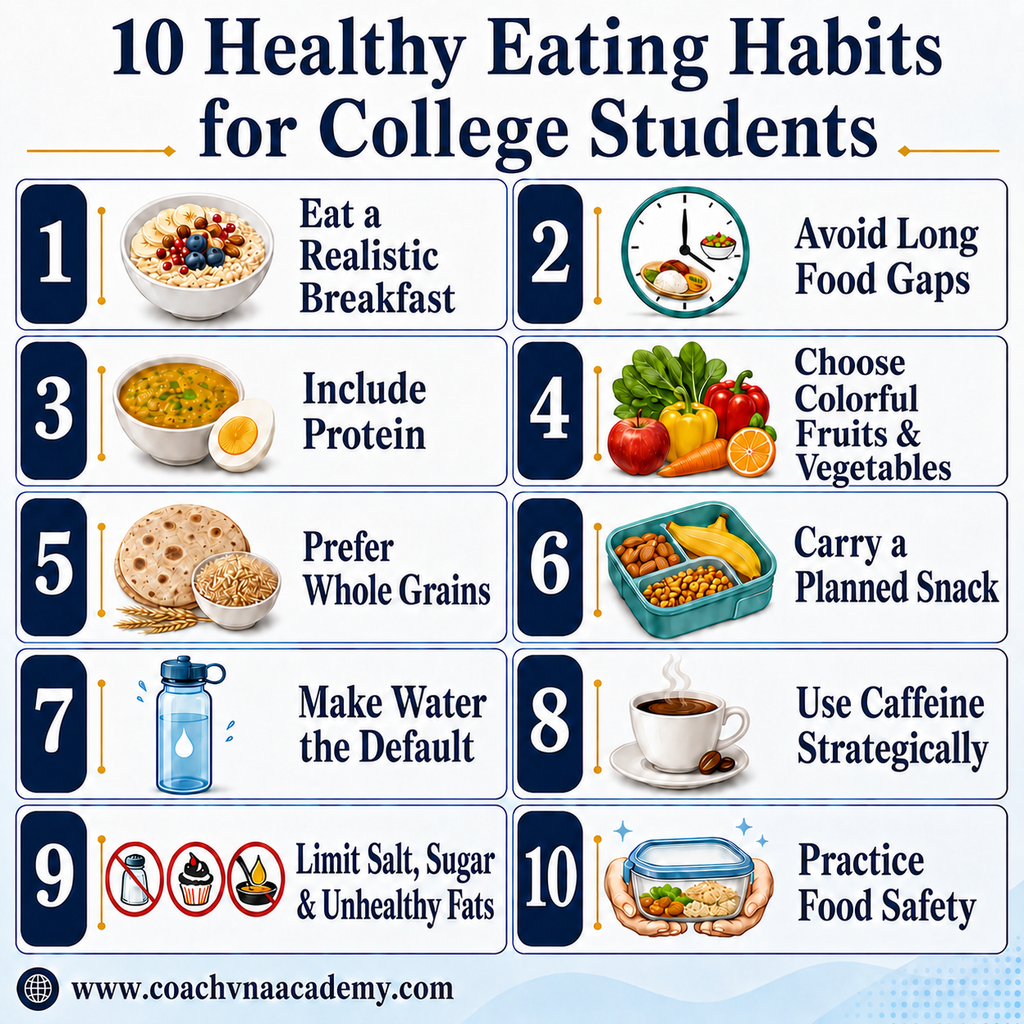
Ten Healthy Eating Habits Students Can Actually Practice
Begin with a realistic breakfast
Breakfast is useful when it prevents prolonged hunger and supports the morning schedule. It does not need to be elaborate. Combine a carbohydrate source with protein and, when possible, fruit or vegetables.
- Poha with peanuts and vegetables
- Vegetable upma with curd
- Oats or dalia with milk and fruit
- Egg with roti and a piece of fruit
- Idli with sambar
- Besan chilla with curd
If eating immediately after waking feels uncomfortable, carry a simple option and eat when appropriate rather than forcing a heavy meal.
Avoid very long gaps without food
Timetables vary, but repeatedly going through long college days without eating can lead to intense hunger and impulsive choices later. Plan a meal or nourishing snack around laboratory sessions, commuting and coaching hours.
Include a protein source in main meals
Protein supports growth, maintenance and repair of body tissues. Practical sources include dal, beans, chickpeas, soy foods, milk, curd, paneer, eggs, fish and lean meat. A cereal-pulse combination—such as rice with dal or roti with chana—improves meal quality and is usually budget-friendly.
Eat vegetables and fruit in varied colours
Different vegetables and fruits contribute different combinations of fibre and micronutrients. Use seasonal, locally available choices. Whole fruit is generally preferable to juice because it retains fibre and is easier to portion.
Choose whole grains and less-refined staples often
Whole grains and millets can contribute fibre and nutrients. Students can rotate whole-wheat roti, brown or hand-pounded rice when acceptable, oats, dalia and millets. A gradual change is often more sustainable than replacing every familiar food at once.
Carry a planned snack
A planned snack can reduce dependence on vending-machine foods and deep-fried options. Choose combinations that are safe to store and easy to carry.
- Fruit with a small portion of unsalted nuts or roasted chana
- Curd when reliable refrigeration is available
- Homemade vegetable sandwich
- Sprouts only when hygienically prepared and safely stored
- Roasted makhana with minimal salt
- Boiled egg carried and consumed under safe temperature conditions
Make water the default beverage
Fluid needs vary with weather, activity, diet and health. Carry a clean reusable bottle, drink regularly and use thirst and urine colour as practical cues. Sugary drinks should not become the main source of hydration. People with kidney, heart or other conditions requiring fluid restriction should follow professional advice.
Use caffeine strategically
Tea and coffee can fit into a healthy pattern, but excessive caffeine may disturb sleep, increase jitteriness or worsen palpitations in susceptible people. Avoid using energy drinks as a substitute for meals or sleep, and reduce late-day caffeine if it interferes with rest.
Limit foods high in salt, sugar and unhealthy fats
Packaged snacks, sweetened beverages, bakery products and frequent deep-fried foods can add substantial salt, free sugars or unhealthy fats while displacing more nutritious foods. The goal is not to label individual foods as morally ‘good’ or ‘bad’; instead, keep such items occasional and portion-aware.
Practice food safety
A healthy food must also be safe. Wash hands, use clean water, keep raw and cooked foods separate, cook thoroughly, and avoid carrying perishable foods for long periods without temperature control. When eating outside, prefer vendors with clean preparation areas, protected food and good turnover.
Aarav’s First Small Change
Aarav did not change all ten habits on Monday. He filled a water bottle, packed a banana and roasted chana, and chose dal with rice at lunch. These choices were ordinary, but they prevented the long gap that usually ended with chips and a sugary drink.
| COACH’S INSIGHT A habit is useful only when it survives a normal timetable. Start with the easiest repeatable change, then build from it. |
Case Study 1: Neha’s Long College Day
Neha attends college from 9 a.m. to 4 p.m. She skips lunch because the canteen meal feels heavy. By the time she reaches home, she is extremely hungry and eats very quickly.
What could she change? Neha could carry a simple, comfortable lunch portion and keep an affordable backup snack such as fruit with roasted chana. Even a smaller planned meal may be more practical than an excessively long gap. This is a fictional/composite educational case.
Case Study 2: Imran’s Examination-Week Routine
During examinations, Imran relies on tea, biscuits and late-night food delivery. He believes proper meals will take too much time. However, poor sleep and irregular eating leave him sluggish the next morning.
A practical response is to prepare simple base foods, keep water nearby, plan one easy snack and protect sleep. He does not need a complicated menu; he needs a routine that reduces last-minute decisions. This is a fictional/composite educational case.
Myth Versus Fact
| Myth | Fact |
| Healthy eating is expensive. | Seasonal produce, pulses, eggs where acceptable, curd and familiar staples can support an affordable pattern. |
| Skipping meals helps everyone control weight. | Skipping may produce intense hunger later; individual weight concerns require appropriate professional guidance. |
| Fruit juice is always equal to whole fruit. | Whole fruit generally retains fibre and is easier to portion. |
| One unhealthy meal ruins the diet. | Overall patterns matter more than one meal. Return to the next practical choice. |
| Energy drinks can replace sleep. | Stimulants cannot provide the restorative functions of sleep. |
Budget-Friendly Food Planning
Healthy eating can be adapted to a student budget. Cost often falls when meals rely on familiar staples, seasonal produce and planned purchases rather than repeated delivery orders.
- Choose seasonal vegetables and fruits rather than expensive imported choices.
- Use economical protein foods such as dal, chana, rajma, peas, soy nuggets, eggs and curd.
- Buy only the quantity that can be stored safely to reduce waste.
- Carry water and one planned snack from home.
- Compare unit prices and read labels instead of relying on front-of-pack claims.
- Cook simple base ingredients in batches when refrigeration and reheating are safe.
A Flexible One-Day Student Meal Framework
The following example is an idea bank, not an individualized diet chart. Quantities must vary with the person.
| Time | Possible choice | Planning principle |
| Breakfast | Vegetable poha + curd; or idli + sambar | Combine staple, protein and produce |
| College snack | Banana/guava + roasted chana | Portable and affordable |
| Lunch | Roti or rice + dal/beans + sabzi + curd | Use the balanced-plate idea |
| Evening | Tea/coffee with little added sugar + nuts or homemade snack | Avoid making caffeine the meal |
| Dinner | Roti/rice + protein dish + two vegetable preparations when available | Keep variety and comfortable portions |
Common Difficulties and Practical Solutions
| Difficulty | Practical response |
| No time in the morning | Prepare ingredients at night or carry a simple breakfast. |
| Hostel menu lacks variety | Use available dal, curd, egg, fruit, nuts or roasted pulses to fill gaps. |
| Frequent cravings during study | Check whether the cause is hunger, thirst, stress, boredom or sleep loss; then respond appropriately. |
| Limited budget | Prioritize seasonal produce, pulses, eggs where acceptable, and homemade snacks. |
| Friends prefer fast food | Join socially while choosing a comfortable portion and balancing other meals. |
| Late-night studying | Plan a light snack if genuinely hungry and protect sleep instead of relying on energy drinks. |
Mindful Eating: Pay Attention Without Judging Yourself
Mindful eating means bringing attention to the eating experience. It is not a diet rule and does not require perfect silence. Before eating, pause briefly and notice your level of hunger. When possible, sit down, reduce screen distraction, chew comfortably, notice taste and texture, and observe when you feel comfortably satisfied.
Aarav began with one phone-free meal each day. He noticed that he often ate very quickly after skipping lunch. This observation helped him plan an earlier snack; it did not become another reason to criticize himself.
| TRY THIS TODAY Choose one meal or snack. Pause before eating, notice hunger, eat without rushing when possible, and check how you feel afterward. |
How to Read a Packaged-Food Label
- Check the serving size and how many servings the package contains.
- Compare products per 100 g or 100 ml when possible.
- Review added sugar, sodium, saturated fat and trans-fat information.
- Read the ingredient list; ingredients usually appear in descending order by weight.
- Do not assume that words such as ‘natural,’ ‘multigrain’ or ‘energy’ automatically make a product healthy.
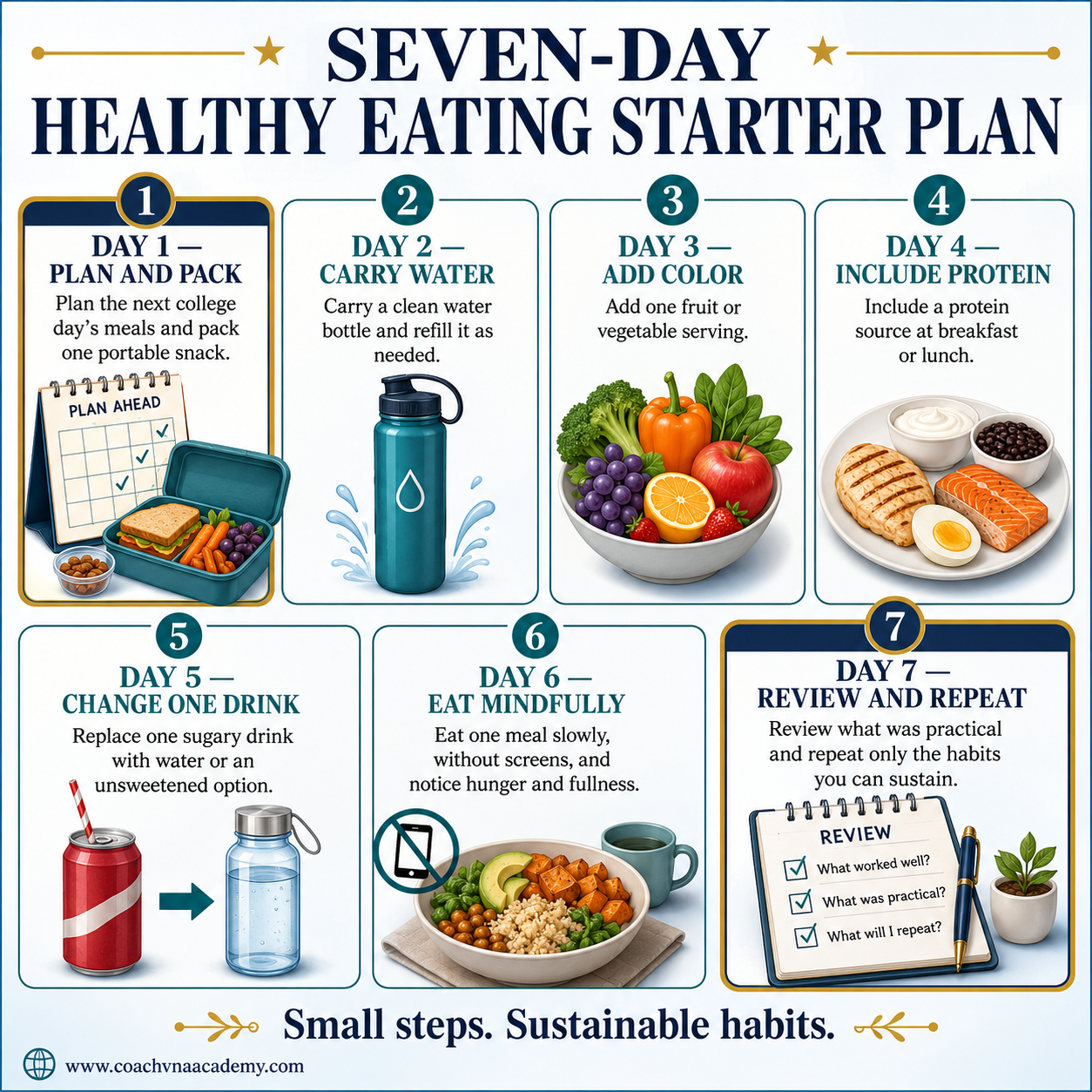
A Seven-Day Healthy Eating Starter Plan
| Day | One practical action |
| Day 1 — Observe | Record meals, snacks and drinks without judging yourself. |
| Day 2 — Hydrate | Carry a clean water bottle and make water the default drink. |
| Day 3 — Add produce | Add one serving of fruit or vegetables. |
| Day 4 — Add protein | Include a protein source at breakfast or lunch. |
| Day 5 — Practise mindful eating | Eat one meal or snack slowly, with fewer distractions, and notice hunger and fullness. |
| Day 6 — Prepare ahead | Pack one portable snack for the next college day. |
| Day 7 — Review and continue | Identify the two habits that were most practical and repeat them next week. |
The plan deliberately gives Day 1 and Day 7 different purposes: Day 1 builds awareness; Day 7 converts experience into a sustainable next step.
What Changed for Aarav?
After seven days, Aarav did not have a “perfect diet.” He carried water on most days, ate fruit more often, included dal or another protein food at lunch, and avoided the longest food gaps. During a busy practical day, his plan slipped—but he resumed at the next meal instead of giving up.
The most important change was not a particular food. It was his ability to notice what his body and timetable required, plan one step ahead, and choose habits he could repeat.
Healthy Eating Checklist for Students
| Check | Student reflection |
| ☐ | I eat from several food groups across the day. |
| ☐ | I include a protein-rich food in main meals. |
| ☐ | I choose vegetables and whole fruit regularly. |
| ☐ | I carry water and drink according to my needs. |
| ☐ | I keep a practical snack available for long college days. |
| ☐ | I limit frequent sugary drinks and highly salty packaged snacks. |
| ☐ | I store and carry food safely. |
| ☐ | I practise at least one meal with attention and fewer distractions. |
| ☐ | I return to my routine after an imperfect day instead of giving up. |
When General Advice Is Not Enough
Students should seek individualized advice from a qualified healthcare professional or registered dietitian when they have diabetes, kidney or liver disease, food allergy, gastrointestinal disease, significant weight change, persistent fatigue, suspected nutrient deficiency, pregnancy, an eating disorder or another condition affected by diet. Persistent dizziness, fainting, severe weakness or other concerning symptoms require medical assessment rather than self-treatment with foods or supplements.
| Educational disclaimer This article provides general wellness education. It does not diagnose, treat or replace personalized medical or nutrition advice. Avoid beginning supplements or restrictive diets solely on the basis of online content. |
Conclusion: Choose One Habit Today
Healthy eating in college is built through small, repeatable choices: regular meals, varied food groups, adequate protein, vegetables and fruit, sensible hydration, planned snacks and safe food handling. Students do not need a perfect diet. A flexible pattern that fits their timetable, budget, culture and health needs is more valuable than a short-lived extreme plan.
| REFLECTION QUESTION Which single change would make tomorrow’s college day easier: carrying water, packing a snack, adding protein, adding produce, or eating one meal more mindfully? |
Authoritative References
ICMR–National Institute of Nutrition: https://www.nin.res.in/dietaryguidelines2024.html
Dietary Guidelines for Indians, 2024: https://www.nin.res.in/dietaryguidelines/pdfjs/locale/DGI_2024.pdf
World Health Organization — Healthy diet: https://www.who.int/health-topics/healthy-diet
WHO India — Healthy diet: https://www.who.int/india/health-topics/healthy-diet-1
Reference note: Recommendations were paraphrased for educational use. Individual dietary requirements vary.