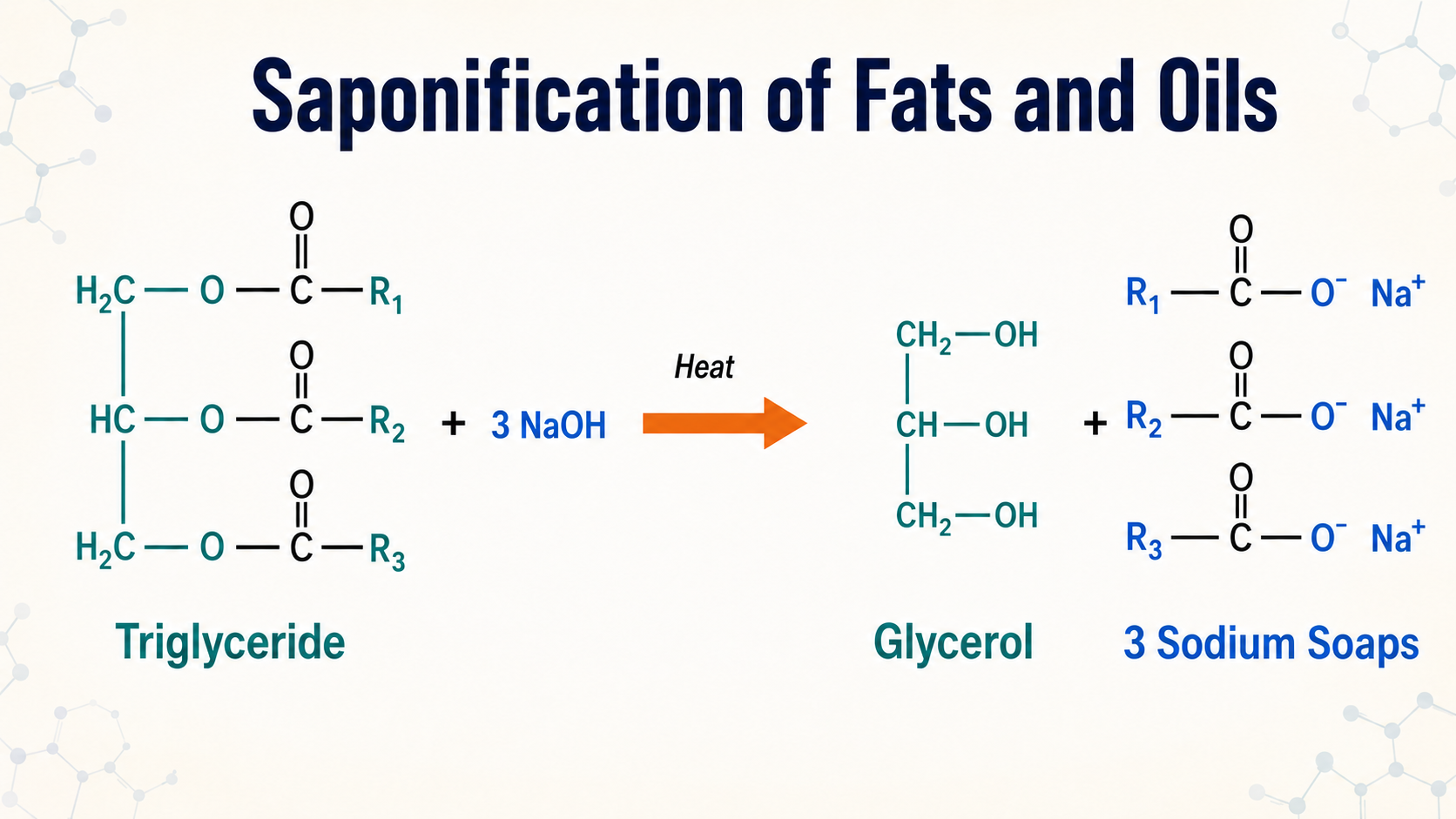
Saponification of fats and oils is an important reaction in pharmaceutical organic chemistry because it connects ester chemistry with soaps, surfactants, glycerol recovery, lipid quality testing and pharmaceutical formulation. In this alkaline hydrolysis reaction, a triglyceride reacts with sodium hydroxide or potassium hydroxide. As a result, the three ester bonds break and form glycerol together with three fatty-acid salts.
What Is Saponification?
Saponification is the alkaline hydrolysis of fats or oils. Since most natural fats and oils consist mainly of triacylglycerols, one triglyceride molecule reacts with three moles of alkali. Sodium hydroxide gives sodium soaps, whereas potassium hydroxide gives potassium soaps.
| Definition for examinations: Saponification is the alkaline hydrolysis of triglycerides to form glycerol and sodium or potassium salts of higher fatty acids. |
Principle of Saponification
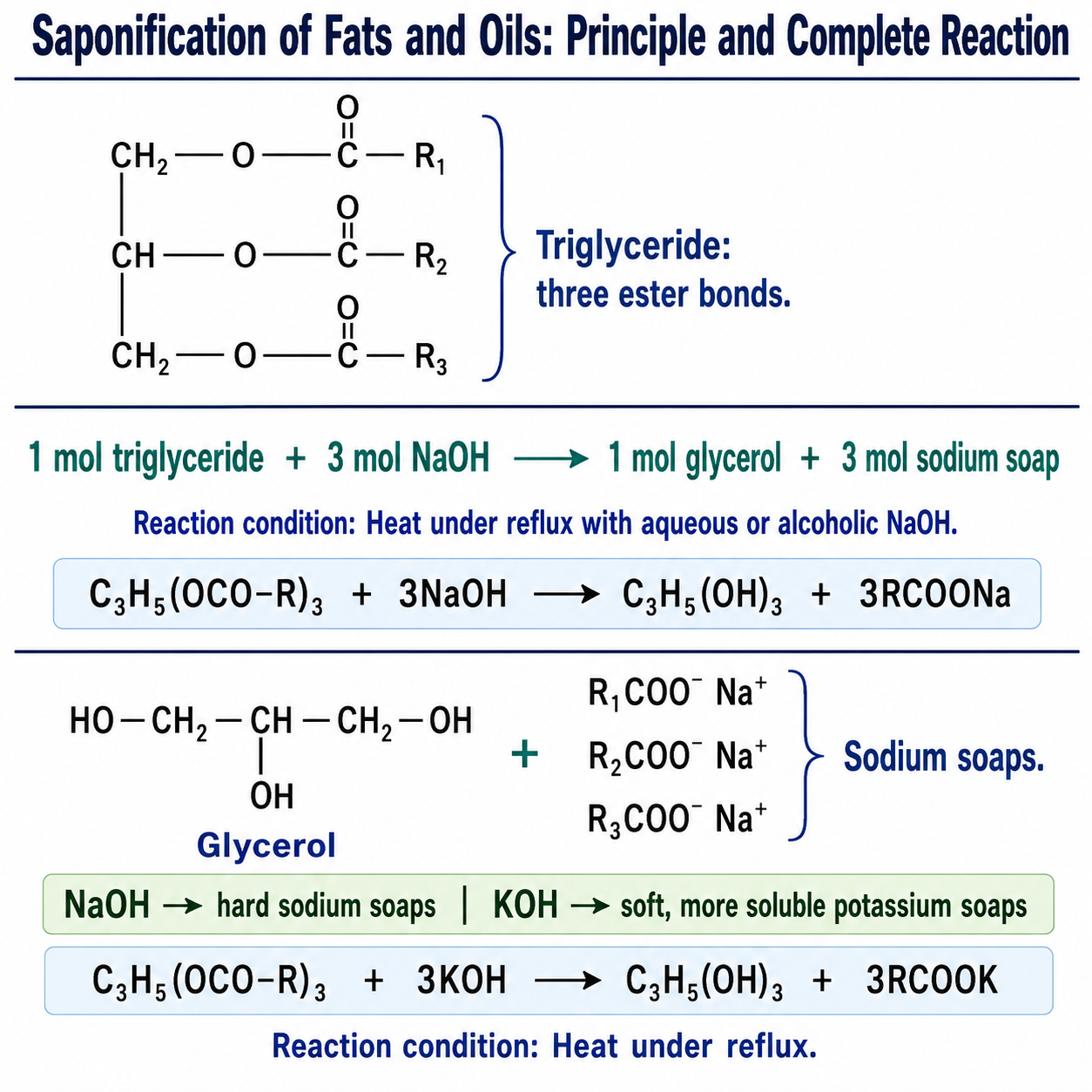
A triglyceride contains three ester linkages. Hydroxide ions attack the electrophilic carbonyl carbons of these linkages. Consequently, every ester bond undergoes nucleophilic acyl substitution. The fatty-acid portion becomes a carboxylate ion, while the glycerol portion becomes an alcohol. Because the carboxylate product is resonance stabilized, the reaction proceeds strongly toward completion.
1 mol triglyceride + 3 mol alkali → 1 mol glycerol + 3 mol soap
Reaction condition: Heat under reflux with aqueous or alcoholic NaOH/KOH.
Complete General Reactions
C₃H₅(OCO–R)₃ + 3NaOH → C₃H₅(OH)₃ + 3RCOONa
Reaction condition: Heat under reflux.
C₃H₅(OCO–R)₃ + 3KOH → C₃H₅(OH)₃ + 3RCOOK
Reaction condition: Heat under reflux.
Here, R represents a long hydrocarbon chain. If the three fatty acids differ, the products should be written separately as R₁COONa, R₂COONa and R₃COONa.
Example: Saponification of Tristearin
C₃H₅(OCOC₁₇H₃₅)₃ + 3NaOH → C₃H₅(OH)₃ + 3C₁₇H₃₅COONa
Reaction condition: Heat with aqueous NaOH.
Tristearin produces glycerol and sodium stearate. Sodium stearate is a hard soap derived from stearic acid.
Mechanism of Saponification
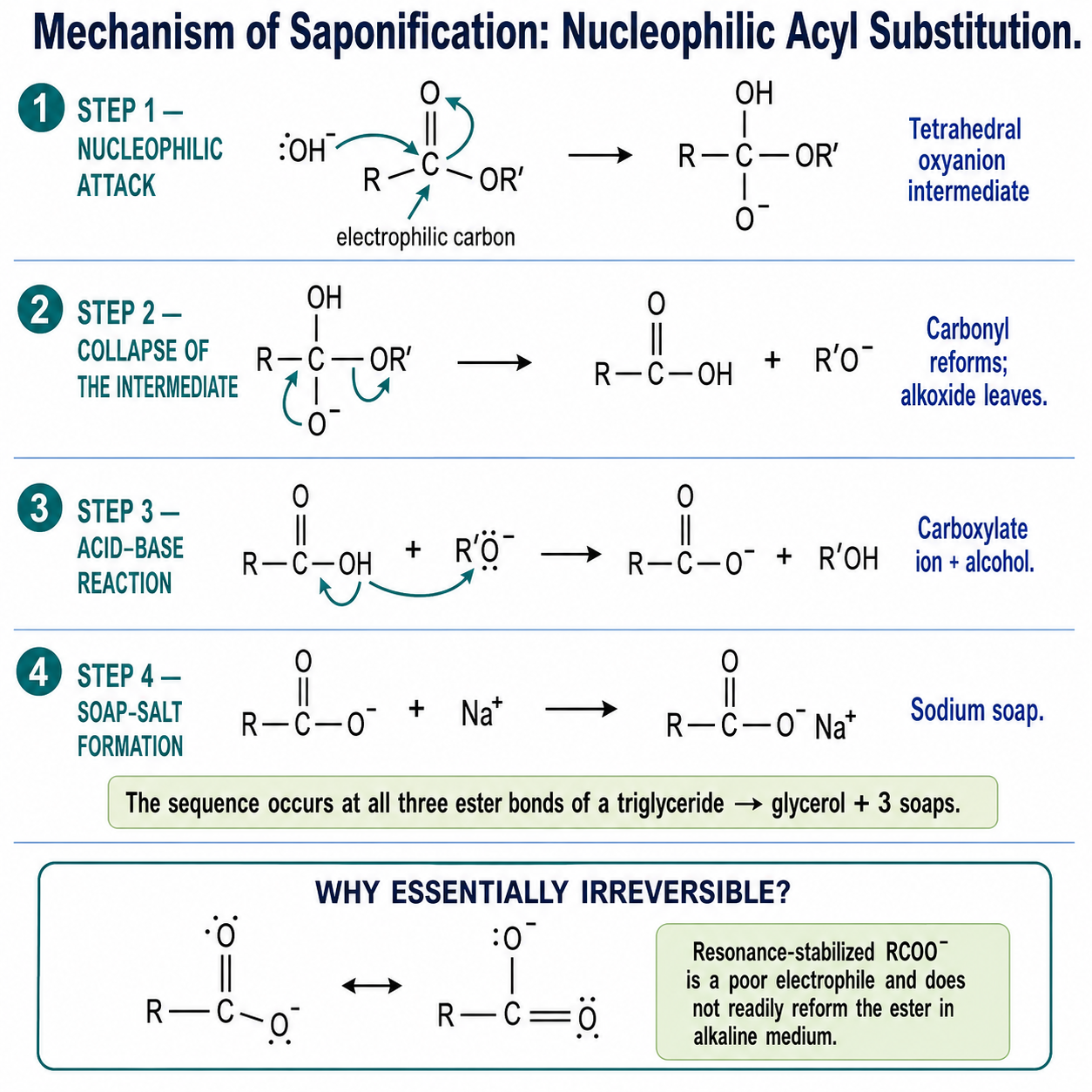
The reaction follows a nucleophilic acyl substitution mechanism. The same sequence occurs at each ester group of a triglyceride.
Step 1: Nucleophilic attack
Hydroxide ion attacks the carbonyl carbon. The carbonyl π bond shifts toward oxygen, producing a tetrahedral oxyanion.
RCOOR′ + OH⁻ → R–C(OH)(O⁻)–OR′
Step 2: Collapse of the intermediate
The negatively charged oxygen reforms the carbonyl group. At the same time, the alkoxy group leaves.
R–C(OH)(O⁻)–OR′ → RCOOH + R′O⁻
Step 3: Acid–base reaction
The alkoxide ion removes the acidic proton from the carboxylic acid. A stable carboxylate ion and an alcohol form.
RCOOH + R′O⁻ → RCOO⁻ + R′OH
Step 4: Formation of soap salt
The carboxylate ion associates with sodium or potassium ion.
RCOO⁻ + Na⁺ → RCOONa
| Why the reaction does not readily reverse: The resonance-stabilized carboxylate ion is a poor electrophile and does not readily react with glycerol to regenerate the triglyceride in alkaline medium. |
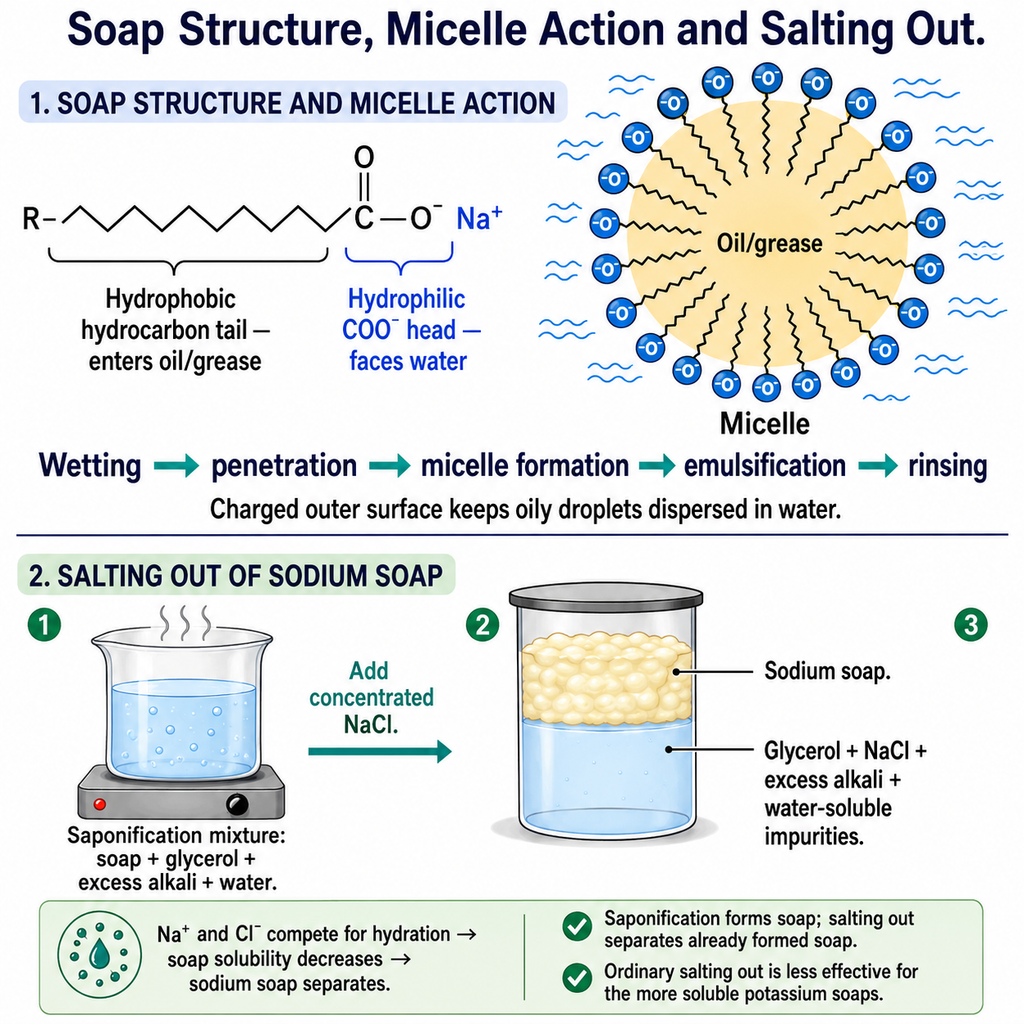
Formation and Structure of Soap
Soap is the sodium or potassium salt of a higher fatty acid. It contains two chemically different regions:
- Hydrophobic tail (R): a long nonpolar hydrocarbon chain that interacts with oil and grease.
- Hydrophilic head (COO⁻Na⁺ or COO⁻K⁺): an ionic region that interacts with water.
R–COO⁻ Na⁺ = hydrophobic tail + hydrophilic head
Because a soap molecule contains both water-loving and oil-loving regions, it acts as an amphiphilic anionic surfactant.
Cleansing Action and Micelle Formation
- Soap lowers the surface and interfacial tension of water.
- Its hydrophobic tails enter the oil or grease, whereas the hydrophilic heads remain in water.
- Many soap molecules surround an oily droplet and form a micelle.
- Agitation breaks grease into small emulsified droplets.
- The charged micelle surface prevents rapid coalescence, so rinsing water carries the dirt away.
| Key sequence: Wetting → penetration into grease → micelle formation → emulsification → dispersion → removal during rinsing. |
Sodium Soaps and Potassium Soaps
| Feature | Sodium soap | Potassium soap |
| Alkali used | NaOH | KOH |
| General formula | RCOONa | RCOOK |
| Physical nature | Usually hard or solid | Usually soft, semi-solid or liquid |
| Water solubility | Comparatively lower | Comparatively higher |
| Common example | Sodium stearate | Potassium oleate |
| Common use | Bar soaps | Soft and liquid soaps |
Salting Out of Soap
After heating fat or oil with sodium hydroxide, the mixture contains soap, glycerol, water, excess alkali and soluble impurities. Concentrated sodium chloride is then added. This separation process is called salting out.
- Complete the saponification reaction by heating.
- Add concentrated sodium chloride solution while stirring.
- Allow the mixture to cool.
- Collect the curdy sodium soap that separates, usually as the upper layer.
- Retain the lower aqueous layer, which contains glycerol, salt, excess alkali and water-soluble impurities.
- Wash and dry the separated soap.
Sodium and chloride ions strongly attract water molecules. Therefore, they reduce the hydration and aqueous solubility of sodium soap. The soap separates, but highly water-soluble glycerol remains in the aqueous layer. Ordinary salting out is less effective for potassium soaps because they are more soluble.
| Important distinction: Saponification forms soap; salting out separates the already formed soap from the reaction mixture. |
Saponification Compared with Hydrolysis
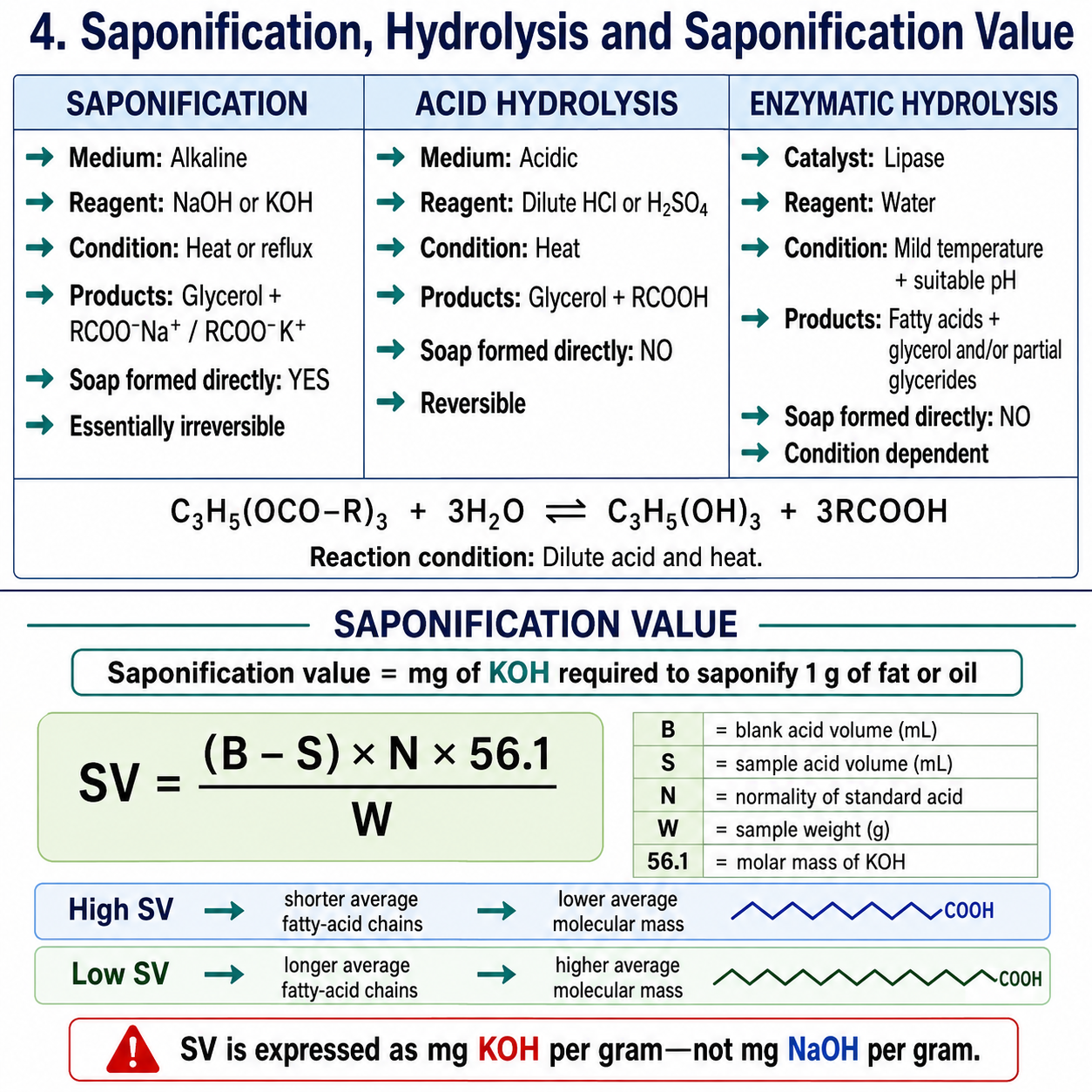
| Feature | Saponification | Acid hydrolysis | Enzymatic hydrolysis |
| Medium | Alkaline | Acidic | Enzyme-controlled |
| Reagent/catalyst | NaOH or KOH | Dilute HCl or H₂SO₄ | Lipase |
| Conditions | Heat or reflux | Dilute acid and heat | Mild temperature, suitable pH |
| Products | Glycerol + fatty-acid salts | Glycerol + free fatty acids | Fatty acids, glycerol and/or partial glycerides |
| Direct soap formation | Yes | No | No |
| Reversibility | Essentially irreversible | Reversible | Depends on conditions |
| Major relevance | Soap preparation and testing | Free fatty-acid production | Digestion and biotechnology |
C₃H₅(OCO–R)₃ + 3H₂O ⇌ C₃H₅(OH)₃ + 3RCOOH
Reaction condition: Dilute acid and heat.
Triglyceride + 3H₂O → glycerol + 3 fatty acids
Reaction condition: Lipase; mild temperature and suitable pH.
Saponification Value
The saponification value is the number of milligrams of potassium hydroxide required to saponify one gram of fat or oil. In the assay, the sample is refluxed with excess alcoholic KOH. The remaining KOH is back-titrated with a standard acid.
Saponification value = mg KOH consumed / g of fat or oil
SV = ((B − S) × N × 56.1) / W
| Symbol | Meaning |
| B | Volume of standard acid used for the blank, mL |
| S | Volume of standard acid used for the sample, mL |
| N | Normality of standard acid |
| W | Weight of fat or oil, g |
| 56.1 | Molar mass of KOH |
- High saponification value: generally indicates shorter average fatty-acid chains and lower average molecular mass.
- Low saponification value: generally indicates longer average fatty-acid chains and higher average molecular mass.
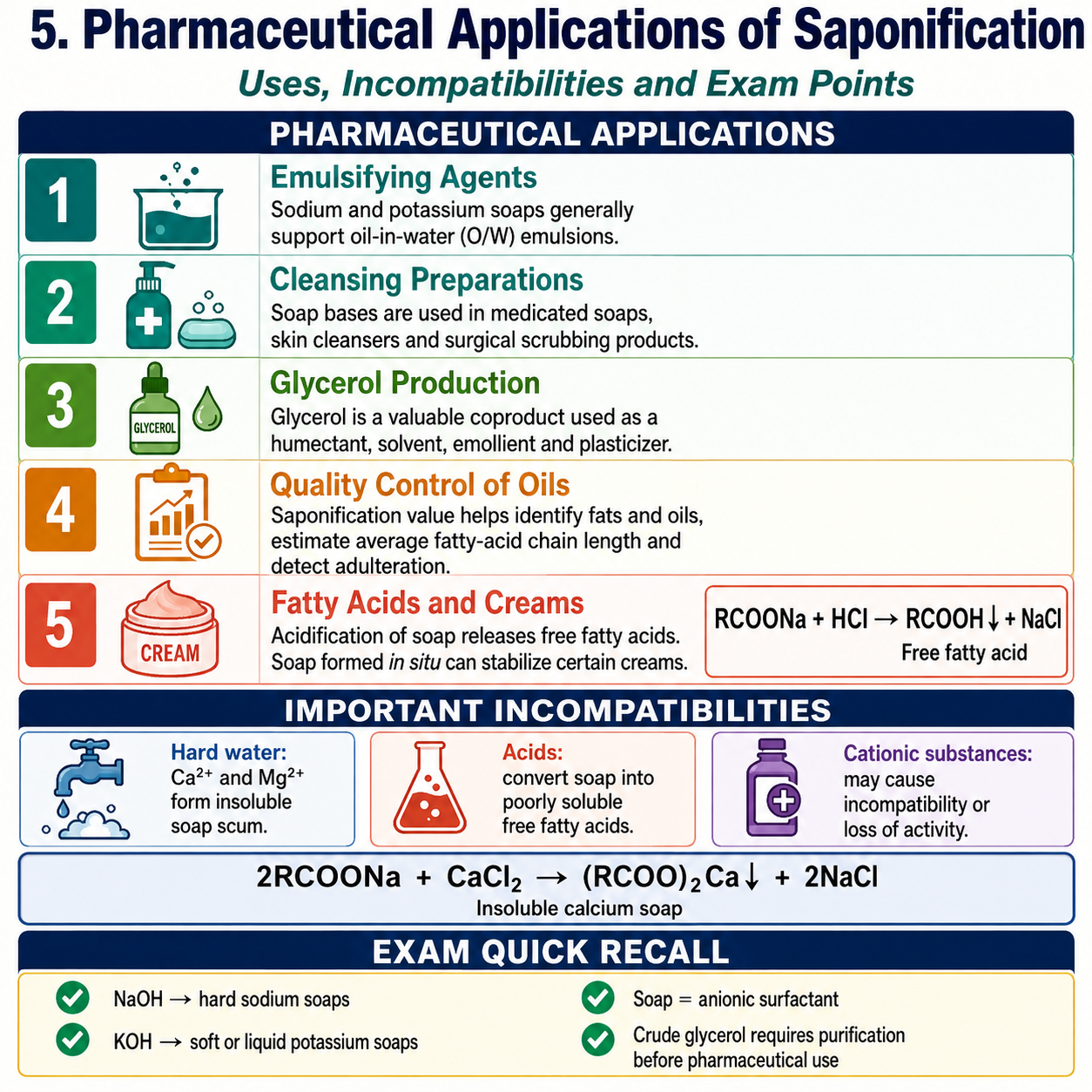
Pharmaceutical Applications
Emulsifying agents
Sodium and potassium soaps can act as anionic surfactants and usually favor oil-in-water emulsions. Calcium soaps can favor water-in-oil systems.
Cleansing preparations
Soap bases provide cleansing action in suitable medicated, surgical and topical cleansing products; the active medicament supplies the specific therapeutic action.
Soft and liquid soaps
KOH produces more soluble soaps that can serve as bases for liquid or semi-solid cleansing preparations.
Glycerol recovery
Purified glycerol serves as a humectant, solvent, cosolvent, sweetener, plasticizer, emollient and viscosity modifier in syrups, creams, lotions, gels and suppository systems.
Lipid quality control
Saponification value supports identity testing, adulteration detection and assessment of average fatty-acid chain length in oils, fats, waxes and lipid excipients.
Fatty-acid preparation
Acidification of a soap releases the corresponding free fatty acid, which can be purified for pharmaceutical or cosmetic use.
Cream formulation
Stearic acid can react with an alkali in situ to form an emulsifying soap that helps stabilize selected cream systems.
Unsaponifiable matter
Analysts can separate sterols, hydrocarbons, pigments and some fat-soluble vitamins that do not form soap under ordinary conditions.
RCOONa + HCl → RCOOH↓ + NaCl
C₁₇H₃₅COOH + KOH → C₁₇H₃₅COOK + H₂O
Limitations of Soap in Pharmaceutical Formulations
- Hard-water Ca²⁺ and Mg²⁺ ions produce insoluble soap scum.
- Acids convert soap into poorly soluble free fatty acids.
- Alkaline soaps may irritate sensitive or damaged skin.
- Soaps may be incompatible with cationic surfactants, cationic drugs and multivalent metal ions.
- Their surfactant action decreases in acidic formulations.
2RCOONa + CaCl₂ → (RCOO)₂Ca↓ + 2NaCl