
Acid, Saponification and Ester Values
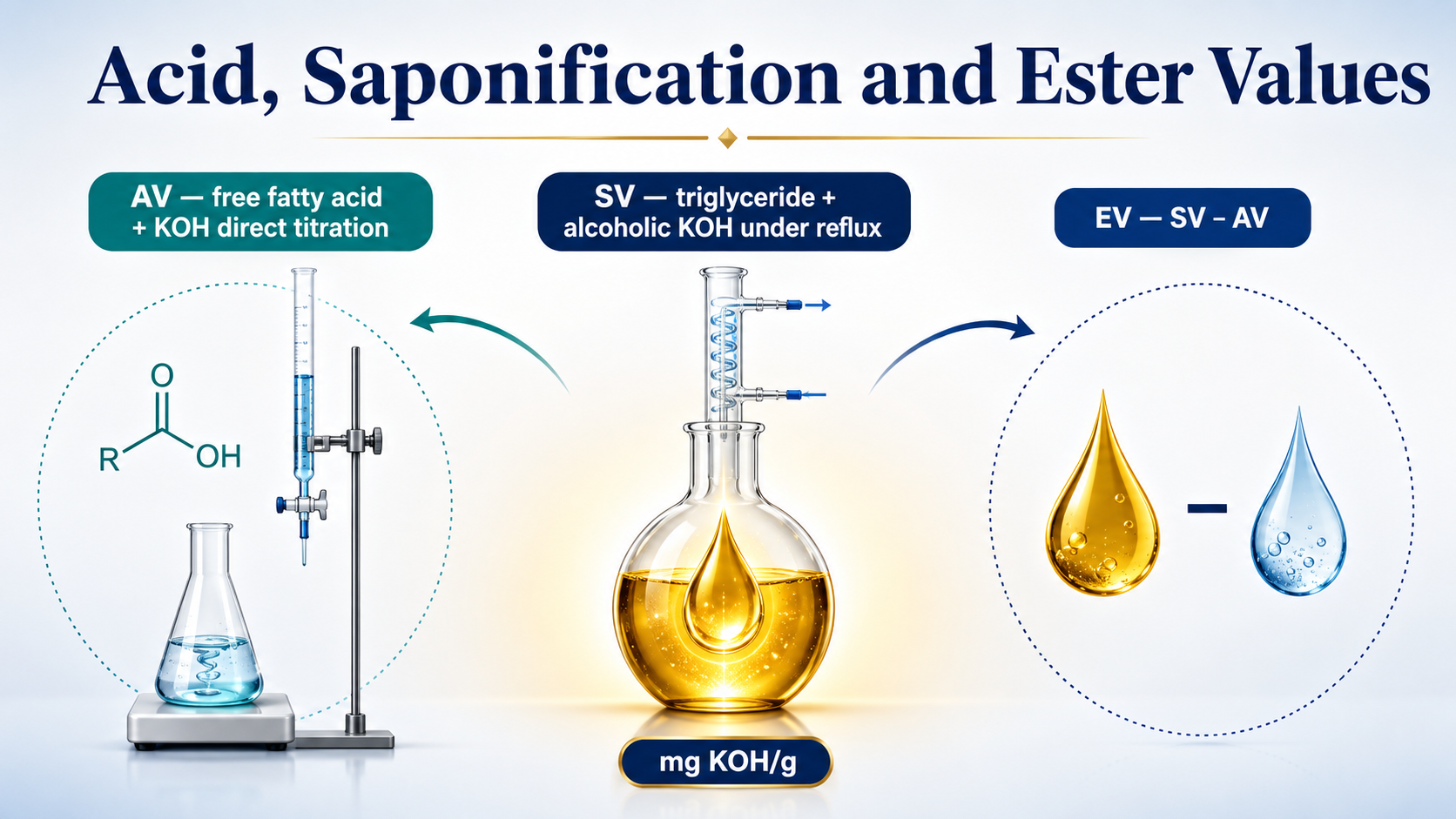
Learn acid, saponification and ester values with clear definitions, principles, reactions, procedures, formulas, worked numericals and exam-focused comparisons for B.Pharm students.
Learn acid, saponification and ester values with clear definitions, principles, reactions, procedures, formulas, worked numericals and exam-focused comparisons for B.Pharm students.
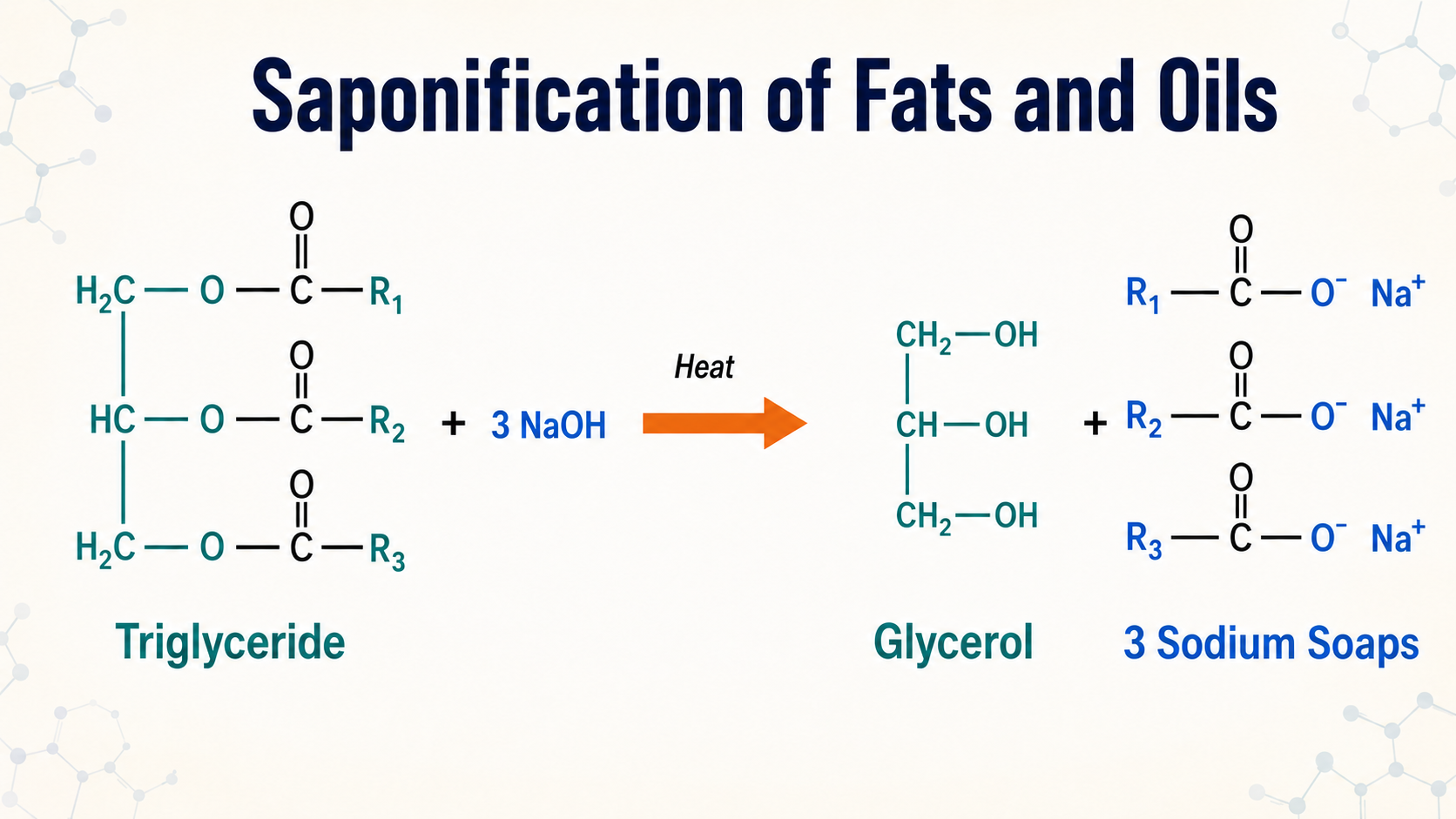
Learn saponification of fats and oils with the principle, complete reaction, stepwise mechanism, soap and micelle formation, salting out, hydrolysis comparison, saponification value and pharmaceutical applications.
The Acetyl Value is an important analytical constant used to determine the concentration of hydroxyl groups (—OH) in a fat, oil, or wax. This is particularly significant for evaluating oils like Castor Oil. It is naturally rich in 18-carbon hydroxylated fatty acid known as ricinoleic acid. Definition The Acetyl Value is defined as the number … Read more
The Ester Value is a critical analytical parameter used primarily to determine the quality and purity of waxes, fats, and essential oils. It is often studied immediately after the Acid value and Saponification value because it is mathematically derived from them. Definition The Ester Value is defined as the number of milligrams (mg) of Potassium … Read more
The Saponification Value (or Saponification Number) is a critical chemical constant used to characterize and assess the quality of fats and oils. It is essentially a measure of the average molecular weight (or chain length) of all the fatty acids present in a sample. Definition and Units: The Saponification Value is defined as the number … Read more