
Fats, Oils and Fatty Acids
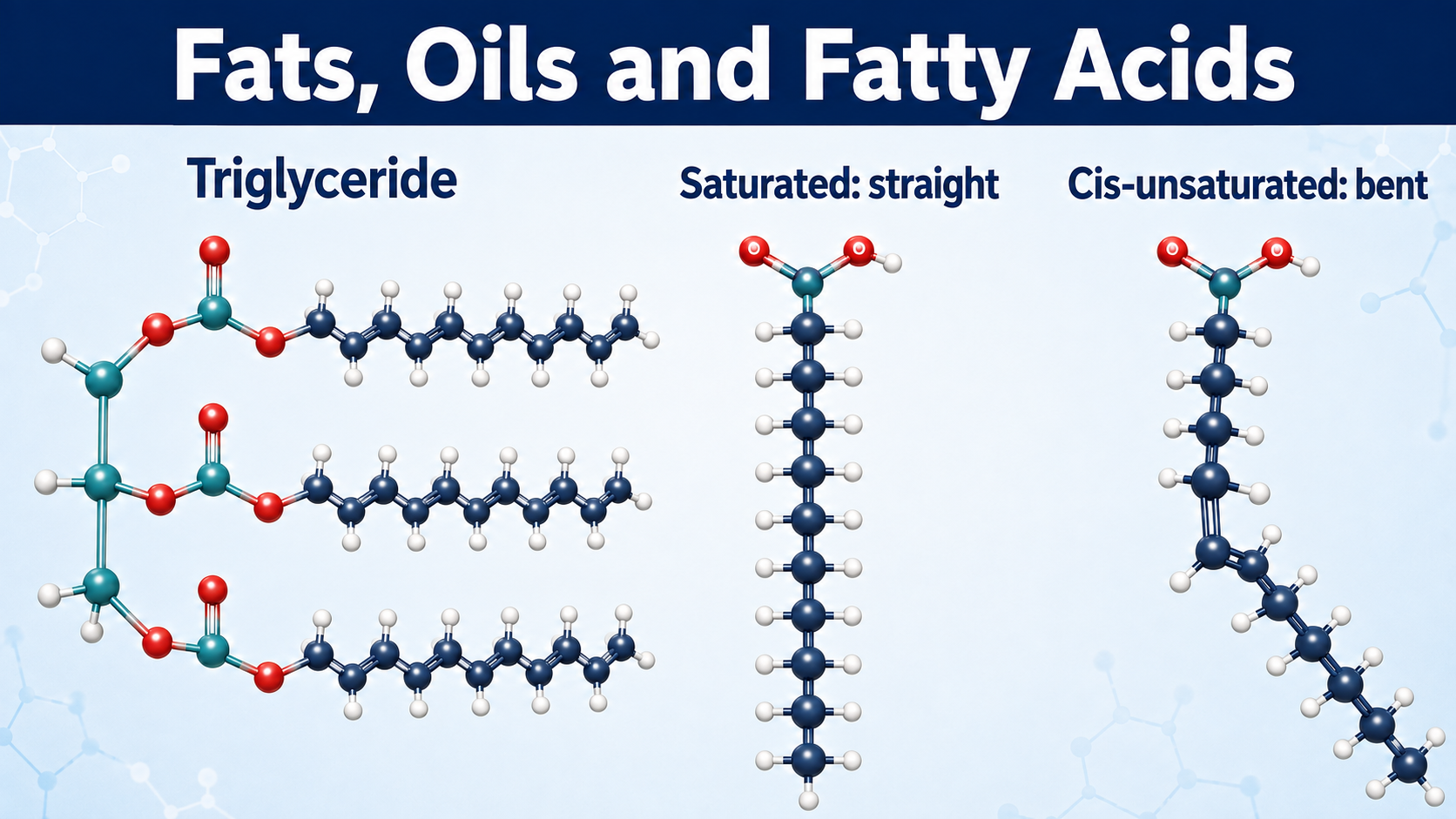
Learn the structure, classification and properties of fats, oils and fatty acids with essential fatty acids, omega notation, examples and exam-oriented notes for BP301T.
Learn the structure, classification and properties of fats, oils and fatty acids with essential fatty acids, omega notation, examples and exam-oriented notes for BP301T.
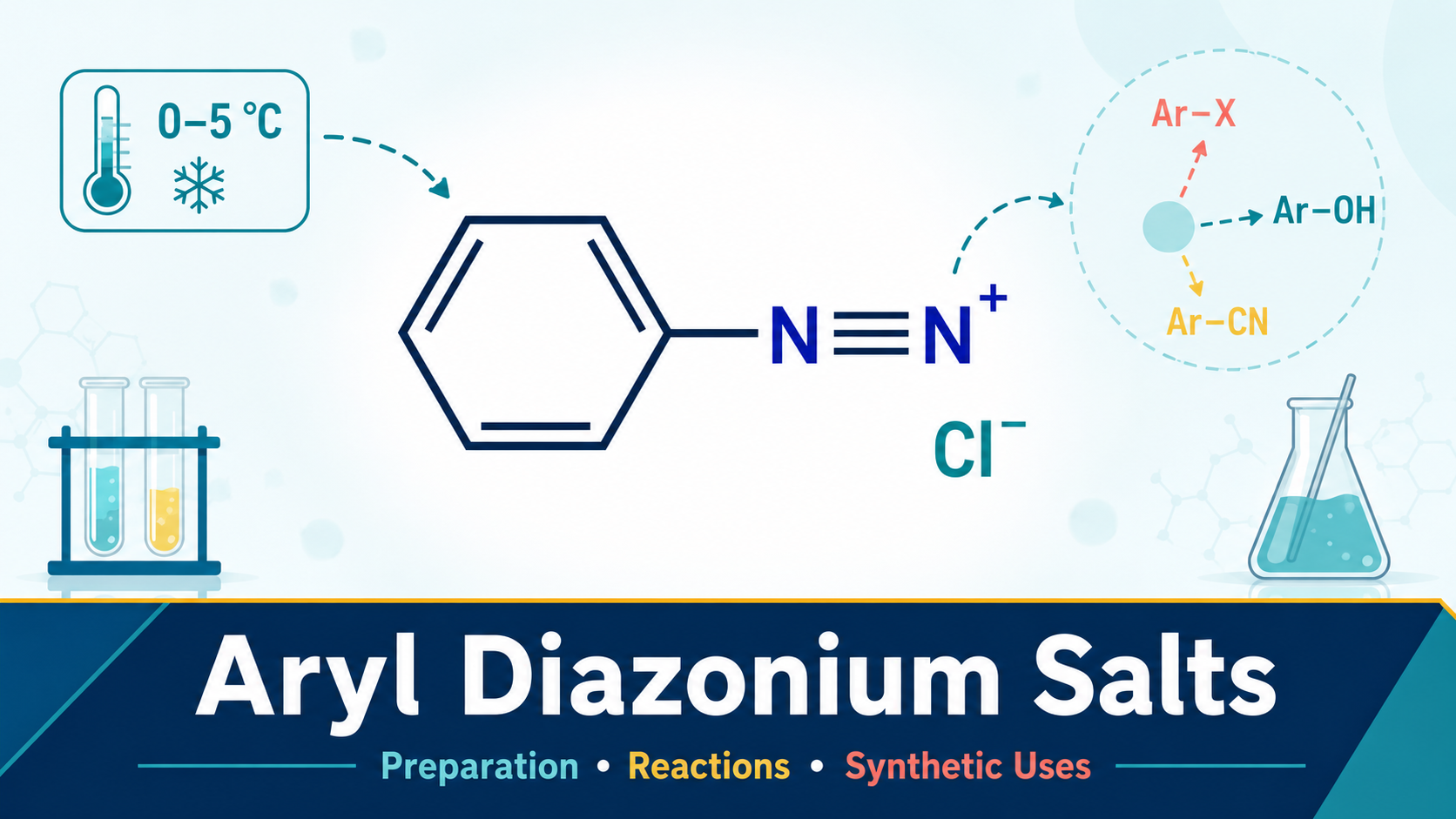
Explore aryl diazonium salts with a clear explanation of their preparation, reactions, and synthetic importance. This BP301T guide covers diazotization of aromatic amines, benzenediazonium chloride, replacement reactions, azo coupling, and important exam-oriented applications.
Explore the basicity of aromatic amines and understand how substituents influence their basic strength. This guide explains aniline basicity, resonance and inductive effects, electron-donating and electron-withdrawing groups, and important trends in substituted aromatic amines.
Explore the acidity of phenols and understand how substituents influence phenolic acidity through inductive and resonance effects. This discussion compares electron-withdrawing and electron-donating groups, explains phenoxide ion stability, and highlights important exam-oriented trends.
Explore phenols with a clear overview of their preparation methods and important chemical reactions. This lecture covers preparation from chlorobenzene, benzene sulfonic acid, diazonium salts and cumene, along with acidity, electrophilic substitution and characteristic reactions of phenol.
Understand orientation in monosubstituted benzene during electrophilic aromatic substitution. This BP301T guide explains ortho-, meta-, and para-directing groups, activating and deactivating effects, resonance, inductive effects, and important exceptions such as halogens.
Learn how substituents affect the reactivity of monosubstituted benzene during electrophilic aromatic substitution. This guide explains activating and deactivating groups, electron-donating and electron-withdrawing effects, and the relative reactivity of substituted benzene rings.
Learn Friedel–Crafts alkylation of benzene through a clear, step-by-step electrophilic aromatic substitution mechanism. This guide explains electrophile formation, the role of AlCl₃, sigma-complex formation, carbocation rearrangement, major limitations, and important examination points.
Learn the sulphonation and halogenation of benzene through clear, step-by-step electrophilic aromatic substitution mechanisms. This explains electrophile formation, reaction conditions, sigma-complex formation, restoration of aromaticity, products, and important examination points.
Learn the nitration of benzene as an electrophilic aromatic substitution reaction, including nitronium-ion formation, sigma-complex formation, reaction mechanism, and restoration of aromaticity.