
Iodine, Acetyl and Reichert-Meissl Values
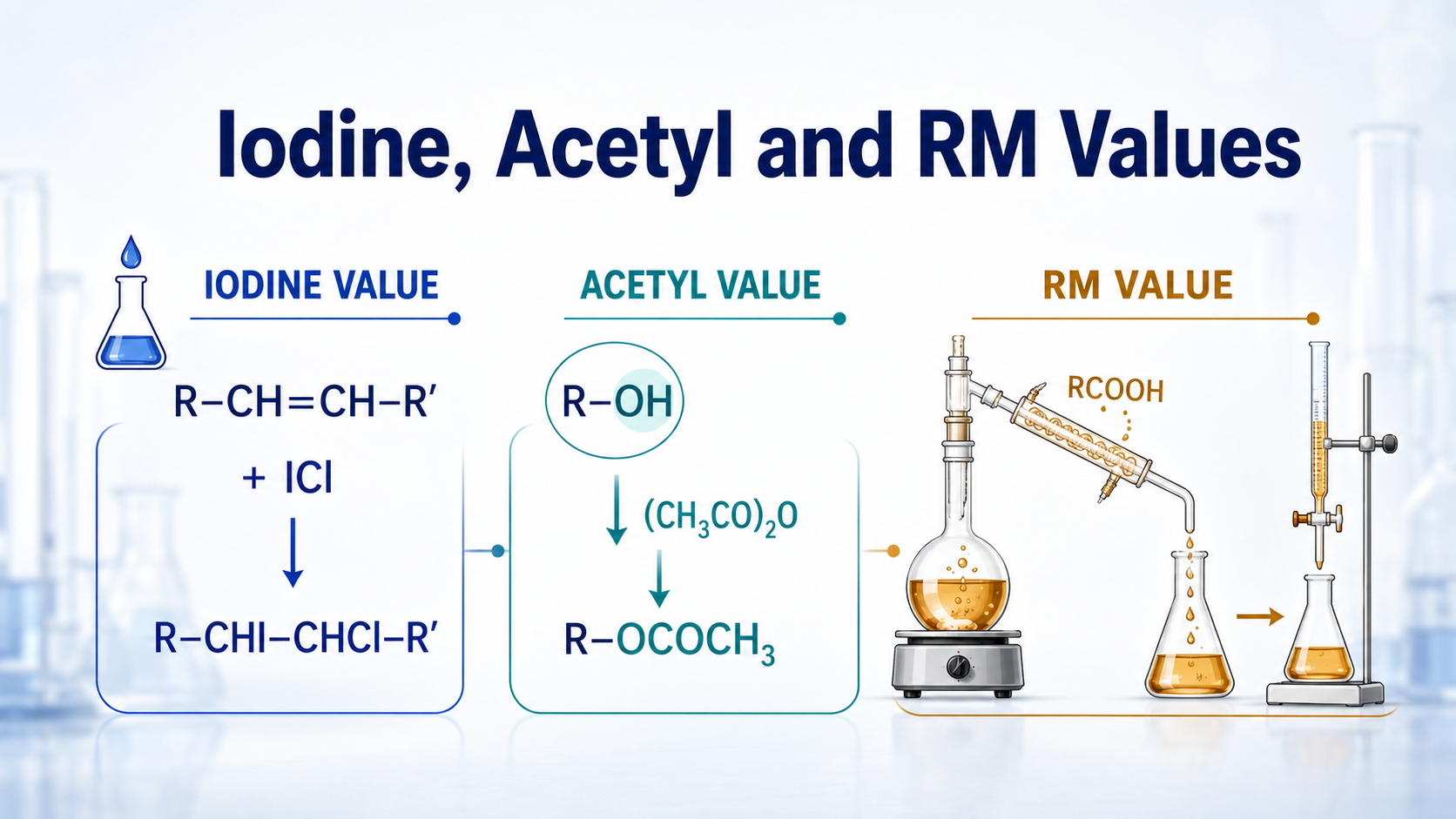
Learn iodine, acetyl and Reichert-Meissl values of fats and oils with principles, reactions, procedures, formulas, worked calculations, uses and exam-focused comparison.
Learn iodine, acetyl and Reichert-Meissl values of fats and oils with principles, reactions, procedures, formulas, worked calculations, uses and exam-focused comparison.
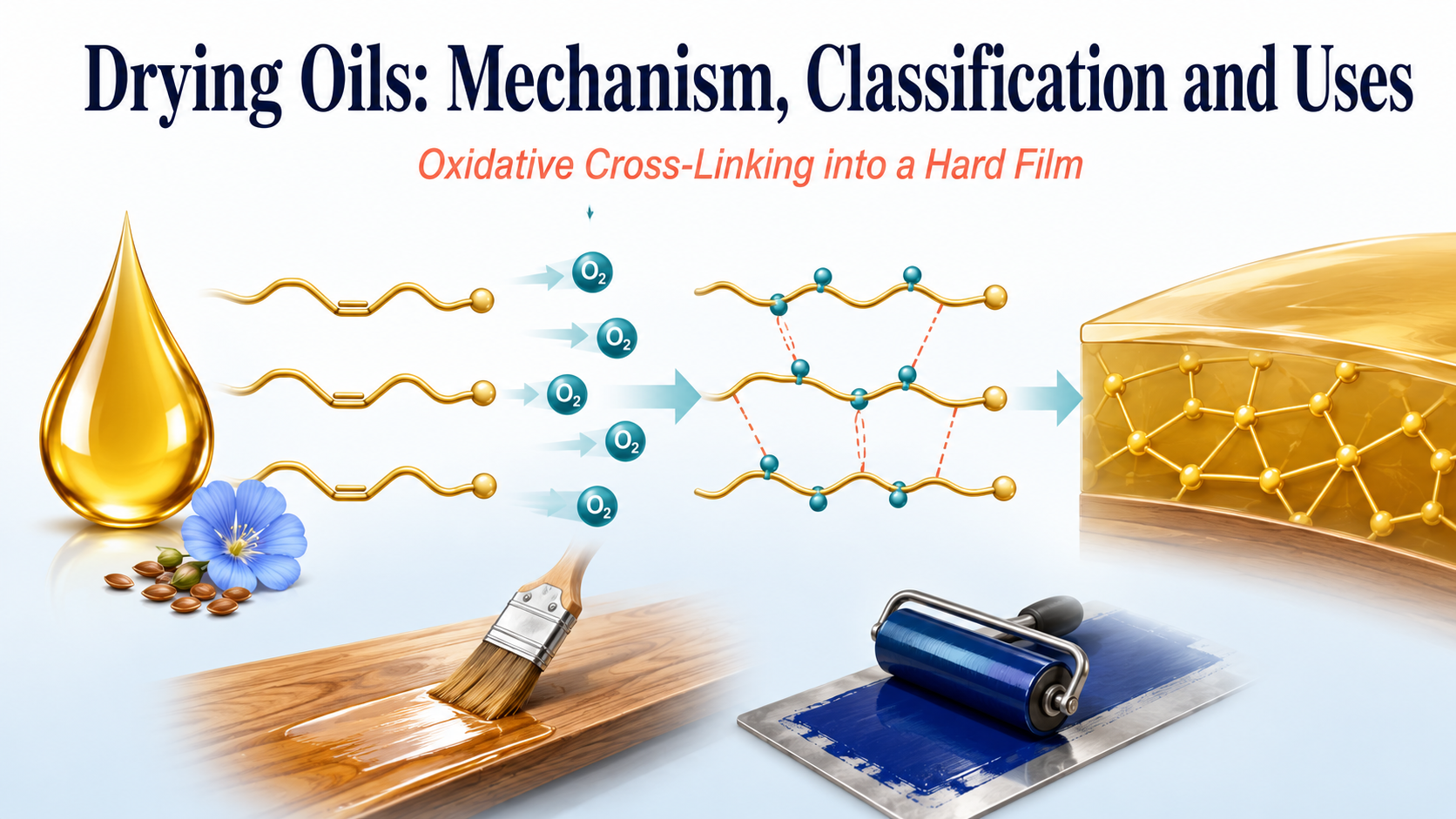
Learn drying oils through clear notes on oxidative polymerization, free-radical mechanism, iodine-value classification, examples, tests, uses, factors and safety.
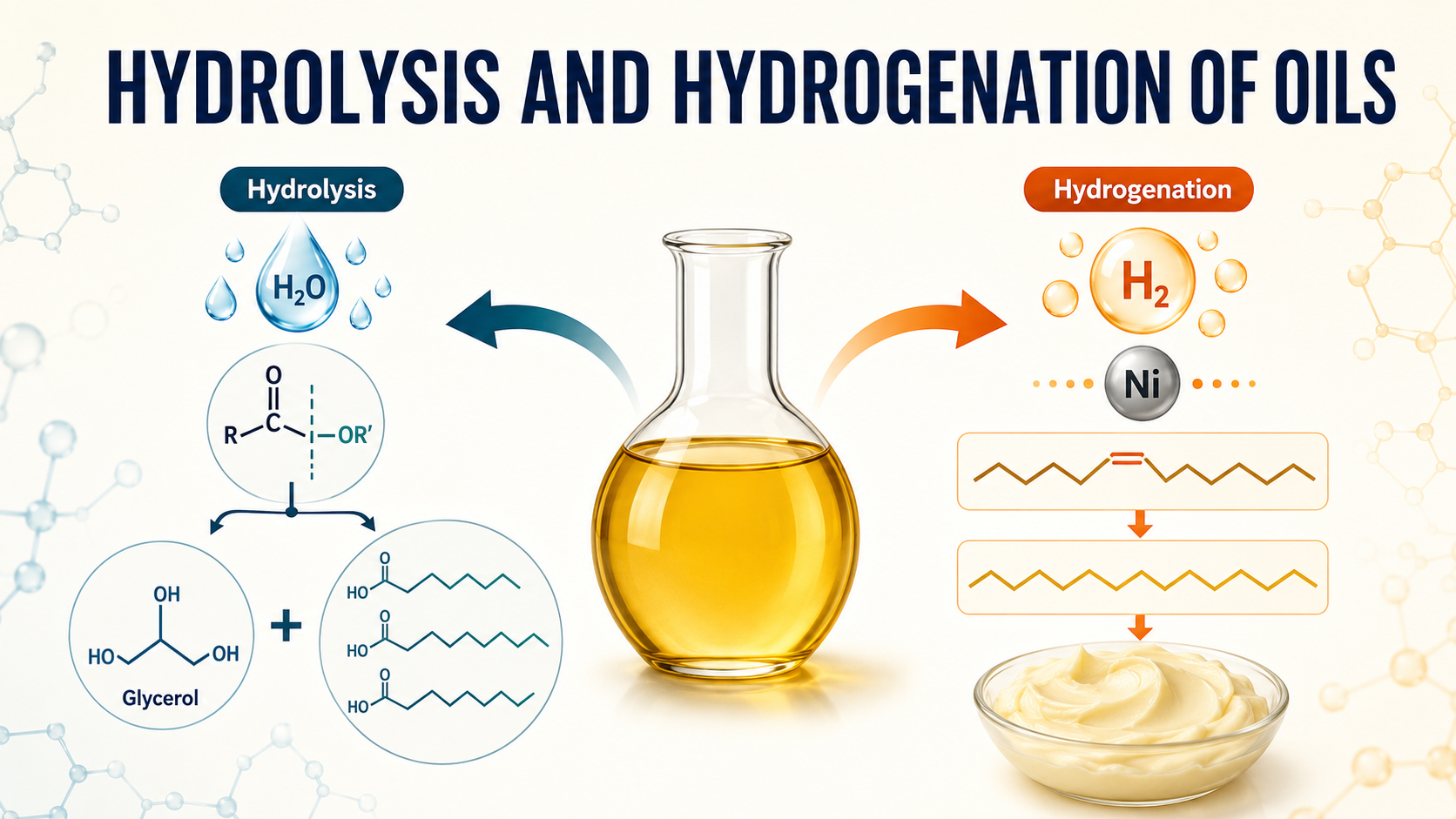
Learn the hydrolysis and hydrogenation of oils through clear reactions, conditions, products, property changes, applications, and exam-focused comparisons.
The Iodine Value (IV), also known as the Iodine Number. It is a fundamental analytical parameter in the analysis of fats and oils. It is a direct measure of the degree of unsaturation (number of double bonds) in a lipid sample. Definition The Iodine Value is defined as the number of grams of iodine absorbed … Read more
In the context of surface coatings and chemistry, drying oils are a vital class of materials. Definition Drying oils are liquid vegetable or animal fats that, when exposed to air, undergo a chemical reaction (polymerization) to form a tough, solid and elastic film. Contrary to the name, they do not “dry” through the evaporation of … Read more